
Ideas clave
1. La tecnología digital está sesgada hacia comportamientos y resultados específicos
Las tecnologías digitales están sesgadas hacia la elección, porque todo debe expresarse en términos de un lenguaje simbólico discreto, de sí o no.
Sesgos inherentes. La tecnología digital no es neutral; viene con tendencias incorporadas que moldean nuestras interacciones y decisiones. Estos sesgos incluyen favorecer la elección, la inmediatez y la abstracción. Comprender estos sesgos nos permite usar las herramientas digitales de manera más consciente y efectiva.
Impactos en la sociedad. Los sesgos de la tecnología digital tienen consecuencias profundas en cómo nos comunicamos, trabajamos y pensamos. Por ejemplo, el sesgo hacia la elección puede provocar fatiga decisoria, mientras que el sesgo hacia la inmediatez puede erosionar nuestra capacidad para pensar de forma profunda y reflexiva. Al reconocer estas tendencias, podemos desarrollar estrategias para contrarrestar sus efectos negativos y aprovechar su potencial positivo.
2. Comprende y navega la naturaleza de “siempre conectados” de la vida digital
En lugar de sentirnos empoderados y conscientes, terminamos agotados y abrumados.
Conectividad constante. La era digital ha inaugurado un tiempo de conexión perpetua, donde se espera que estemos disponibles y respondamos en todo momento. Esta mentalidad de “siempre conectados” puede generar estrés, agotamiento y una disminución en nuestra capacidad para concentrarnos en tareas importantes.
Recuperar el control. Para combatir los efectos negativos de la conectividad constante, debemos:
- Establecer límites en el uso de dispositivos
- Crear momentos designados para estar “offline”
- Practicar un uso consciente de la tecnología
- Priorizar las interacciones cara a cara
- Desarrollar estrategias para el trabajo profundo y la atención enfocada
Al tomar el control de nuestros hábitos digitales, podemos aprovechar los beneficios de la conectividad evitando sus trampas.
3. Equilibra las conexiones virtuales con las interacciones en el mundo real
El ámbito digital está sesgado en contra de lo local y a favor de la deslocalización.
Presencia virtual vs. física. La tecnología digital ha ampliado nuestra capacidad para conectar con personas a grandes distancias, pero también ha llevado a una devaluación de las interacciones locales y presenciales. Este cambio puede generar una sensación de desconexión con nuestro entorno inmediato y nuestras comunidades.
Buscar un equilibrio. Para mantener relaciones saludables y un fuerte sentido de lugar:
- Prioriza las interacciones en persona siempre que sea posible
- Usa las herramientas digitales para complementar, no reemplazar, las conexiones locales
- Participa en actividades y eventos comunitarios
- Practica la atención plena y la presencia en los espacios físicos
- Reconoce el valor único de las experiencias corporizadas
Al equilibrar conscientemente nuestras interacciones virtuales y físicas, podemos aprovechar los beneficios de la conectividad digital preservando la riqueza de las experiencias locales y tangibles.
4. Reconoce la simplificación excesiva de temas complejos en los espacios digitales
El ámbito digital está sesgado hacia la reducción de la complejidad.
Tendencias reduccionistas. Las plataformas digitales suelen fomentar la simplificación de temas matizados en elecciones binarias o frases breves. Esto puede conducir a la polarización, malentendidos y pérdida de contexto en discusiones importantes.
Abrazar la complejidad. Para contrarrestar este sesgo:
- Busca perspectivas diversas y contenidos extensos
- Practica el pensamiento crítico y la verificación de hechos
- Participa en discusiones reflexivas y matizadas, tanto en línea como fuera de ella
- Reconoce las limitaciones de las representaciones digitales de temas complejos
- Fomenta y participa en enfoques interdisciplinarios para resolver problemas
Al aceptar activamente la complejidad, podemos promover diálogos más significativos y desarrollar soluciones más completas a los desafíos sociales.
5. Mantén tu identidad y responsabilidad en los entornos en línea
Sé tú mismo.
Anonimato digital. Internet a menudo permite interacciones anónimas o bajo seudónimos, lo que puede generar una desconexión entre nuestro yo en línea y fuera de línea. Esto puede resultar en una menor responsabilidad y una tendencia a comportamientos más extremos o dañinos.
Presencia auténtica en línea. Para cultivar una presencia digital responsable y auténtica:
- Usa tu nombre real cuando sea apropiado
- Asume la responsabilidad de tus acciones y palabras en línea
- Desarrolla una persona digital coherente que se alinee con tu yo fuera de línea
- Reconoce la permanencia de las comunicaciones digitales
- Fomenta la empatía y la comprensión en las interacciones en línea
Al mantener nuestra identidad y responsabilidad en línea, podemos crear un entorno digital más honesto, respetuoso y constructivo.
6. Abraza el poder de la apertura respetando la propiedad intelectual
Comparte, no robes.
Colaboración abierta. La era digital ha permitido niveles sin precedentes de intercambio y colaboración, impulsando innovaciones en software de código abierto, licencias de creative commons y plataformas colaborativas como Wikipedia.
Equilibrar apertura y propiedad. Para navegar este nuevo panorama:
- Entiende y respeta los diferentes tipos de derechos de propiedad intelectual
- Utiliza recursos de código abierto y creative commons de manera adecuada
- Contribuye a proyectos colaborativos cuando sea posible
- Atribuye y reconoce correctamente el trabajo de otros
- Apoya a los creadores mediante un consumo ético y una compensación justa
Al abrazar la apertura respetando la propiedad intelectual, fomentamos una cultura de innovación y creatividad que beneficia a todos.
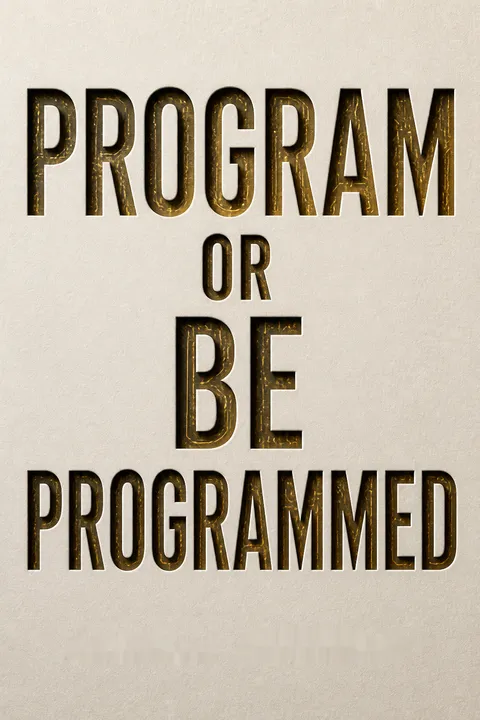
7. Aprende a programar o arriesga ser programado
Si no aprendemos a programar, corremos el riesgo de ser programados.
Alfabetización digital. En un mundo cada vez más digital, entender cómo funciona la tecnología es crucial para mantener la agencia y tomar decisiones informadas. Las habilidades de programación se están volviendo tan fundamentales como leer y escribir.
Empoderamiento a través del código. Para prosperar en la era digital:
- Aprende conceptos y lenguajes básicos de programación
- Comprende la lógica detrás de algoritmos y estructuras de datos
- Explora las implicaciones éticas de la tecnología
- Aboga por la educación en ciencias de la computación en las escuelas
- Fomenta el pensamiento crítico sobre el papel de la tecnología en la sociedad
Al desarrollar habilidades de programación y alfabetización digital, podemos moldear activamente el paisaje tecnológico en lugar de ser consumidores pasivos.
Resumen de reseñas
Programar o ser programado ha recibido opiniones encontradas. Algunos elogian su análisis profundo sobre el impacto de la tecnología digital en la sociedad y los consejos prácticos para desenvolverse en la era digital. Otros, en cambio, lo consideran repetitivo, obvio o carente de sustancia. Muchos valoran la exploración que hace Rushkoff sobre los sesgos inherentes a la tecnología y su llamado a la alfabetización digital, incluyendo habilidades de programación. Sin embargo, los críticos señalan que algunas analogías son defectuosas y las soluciones propuestas insuficientes. En conjunto, los lectores aprecian las ideas que invitan a la reflexión sobre nuestra relación con la tecnología, aunque no coincidan con todos los argumentos de Rushkoff.
También leyeron









Preguntas frecuentes
What's "Program or Be Programmed: Ten Commands for a Digital Age" about?
- Digital Age Challenges: The book explores the challenges and opportunities presented by the digital age, emphasizing the importance of understanding and engaging with digital technologies.
- Ten Commands: It provides ten "commands" or guidelines to help individuals navigate the digital landscape effectively and responsibly.
- Programming vs. Being Programmed: The central theme is the choice between programming digital tools or being passively programmed by them, highlighting the need for active participation in digital culture.
- Cultural and Social Impact: Rushkoff discusses the broader cultural and social implications of digital technologies, urging readers to consider their roles in shaping the future.
Why should I read "Program or Be Programmed"?
- Understanding Digital Biases: The book helps readers understand the inherent biases of digital technologies and how they influence human behavior and society.
- Empowerment through Knowledge: By learning about programming and digital literacy, readers can gain more control over their interactions with technology.
- Cultural Insight: Rushkoff provides insights into how digital technologies are reshaping culture, communication, and personal identity.
- Practical Guidance: The ten commands offer practical advice for living and working in a digital world, making it a valuable resource for anyone navigating modern technology.
What are the key takeaways of "Program or Be Programmed"?
- Be Conscious of Time: Digital technologies can disrupt our sense of time; it's important to manage how and when we engage with them.
- Value Real-World Interactions: Despite the convenience of digital communication, in-person interactions remain crucial for genuine connection.
- Embrace Complexity: Digital tools often oversimplify complex issues; it's vital to recognize and address this reduction.
- Learn to Program: Understanding programming is essential to avoid being passively controlled by technology and to actively shape digital experiences.
How does Douglas Rushkoff define "programming" in the book?
- Beyond Coding: Programming is not just about writing code; it's about understanding how digital systems work and influence us.
- Empowerment Tool: It is a means of gaining control over technology, allowing individuals to shape their digital environments.
- Cultural Literacy: Programming is seen as a form of literacy necessary for participating fully in the digital age.
- Active Participation: Rushkoff emphasizes programming as a way to actively engage with and influence the digital world, rather than being a passive consumer.
What are the "Ten Commands" in "Program or Be Programmed"?
- Time: Do not be always on; manage your digital engagement.
- Place: Live in person; prioritize real-world interactions.
- Choice: You may always choose none of the above; resist forced digital choices.
- Complexity: You are never completely right; embrace complexity and nuance.
- Scale: One size does not fit all; recognize the limits of digital scalability.
- Identity: Be yourself; maintain authenticity online.
- Social: Do not sell your friends; value genuine connections over commercial interests.
- Fact: Tell the truth; prioritize factual communication.
- Openness: Share, don’t steal; respect intellectual property and collaboration.
- Purpose: Program or be programmed; learn to code and understand digital systems.
What does Rushkoff mean by "Program or Be Programmed"?
- Choice of Agency: The phrase emphasizes the choice between actively shaping digital tools or being passively shaped by them.
- Control Over Technology: It highlights the importance of understanding and controlling the technologies we use.
- Cultural Influence: The concept underscores the role of programming in influencing culture and society.
- Empowerment Message: Rushkoff encourages readers to learn programming to gain empowerment and agency in the digital age.
How does "Program or Be Programmed" address the concept of digital identity?
- Anonymity vs. Authenticity: Rushkoff discusses the tension between anonymity and authenticity in digital interactions.
- Accountability: He emphasizes the importance of being accountable for one's words and actions online.
- Identity as Liability: The book explores how digital identity can be a liability, especially when anonymity leads to depersonalized behavior.
- Encouragement to Be Real: Rushkoff encourages readers to maintain their real identities online to foster genuine connections and accountability.
What are the implications of digital technology's bias toward choice, according to Rushkoff?
- Forced Decisions: Digital systems often force users to make choices, even when unnecessary, due to their binary nature.
- Illusion of Freedom: The abundance of choices can create an illusion of freedom while actually limiting true autonomy.
- Consumer Manipulation: Marketers exploit this bias to influence consumer behavior and preferences.
- Resisting Categorization: Rushkoff advises readers to resist unnecessary categorization and embrace the option of choosing none of the above.
How does Rushkoff suggest we handle the complexity of digital information?
- Recognize Oversimplification: Digital tools often oversimplify complex issues, leading to polarized views and misunderstandings.
- Value Context: It's important to seek context and understand the broader picture rather than relying solely on digital summaries.
- Embrace Nuance: Rushkoff encourages embracing complexity and nuance in digital interactions and decision-making.
- Avoid Binary Thinking: He warns against the reductionist nature of digital systems that promote binary thinking and choices.
What does Rushkoff say about the social nature of digital media?
- Inherent Social Bias: Digital media is inherently social, designed to connect people rather than isolate them.
- Monetization Risks: Attempts to monetize social interactions can compromise the integrity of digital networks.
- Value Genuine Connections: Rushkoff emphasizes the importance of valuing genuine human connections over commercial interests.
- Evolutionary Imperative: He suggests that the drive for social connection is an evolutionary imperative, pushing us toward greater collaboration.
What are some of the best quotes from "Program or Be Programmed" and what do they mean?
- "Program, or be programmed." This encapsulates the book's central message about the importance of understanding and engaging with digital technologies.
- "The content is not the message, the contact is." Rushkoff highlights the value of human connection over the content itself in digital interactions.
- "Tell the truth." This command underscores the digital age's bias toward factual communication and the importance of honesty.
- "Be yourself." Rushkoff encourages authenticity and accountability in digital spaces, warning against the depersonalization of online interactions.
How does "Program or Be Programmed" address the issue of digital openness and sharing?
- Bias Toward Sharing: Digital networks are inherently biased toward openness and sharing, reflecting their collaborative origins.
- Distinguishing Sharing from Stealing: Rushkoff emphasizes the importance of understanding the difference between sharing and exploiting others' work.
- Cultural Shift: The book discusses the cultural shift toward openness and the challenges it presents in terms of intellectual property.
- Promoting Ethical Sharing: Rushkoff advocates for ethical sharing practices that respect creators' rights while embracing digital collaboration.
Sobre el autor
Otros libros de Douglas Rushkoff


Descargar PDF
Descargar EPUB
.epub digital book format is ideal for reading ebooks on phones, tablets, and e-readers.








































