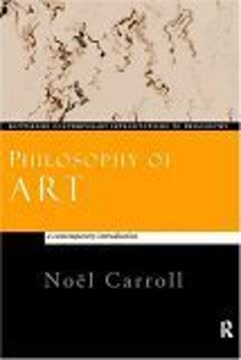
Ideas clave
1. El arte no puede definirse de manera definitiva mediante condiciones universales
"El arte no puede definirse, como habían supuesto filósofos anteriores, porque es un concepto abierto, un término que designa un campo de actividad donde la originalidad y la invención son posibilidades permanentes."
Complejidad definitoria. El concepto de arte se resiste a una definición simple y universal debido a su naturaleza dinámica e innovadora. Filósofos han intentado repetidamente crear definiciones integrales, pero cada teoría termina sin abarcar todo el espectro de la expresión artística.
Dificultades para definir el arte:
- Gran diversidad de formas artísticas
- Aparición constante de nuevos movimientos artísticos
- Variaciones culturales e históricas en las prácticas artísticas
- Innovaciones tecnológicas y creativas continuas
Implicaciones filosóficas. La imposibilidad de definir el arte de manera concluyente sugiere que es un concepto fluido y en evolución, más que una categoría estática. Esta perspectiva destaca la capacidad del arte para reinventarse continuamente y desafía los enfoques filosóficos tradicionales de clasificación.
2. La representación en el arte es compleja y está en constante evolución
"Las imágenes suelen implicar ciertas convenciones o códigos. Para entender que el halo alrededor de la cabeza de una mujer en una pintura significa que es una santa, es necesario conocer qué representan esos círculos iluminados."
Diversidad representacional. La representación artística no es un simple reflejo de la realidad, sino un proceso complejo que involucra convenciones culturales, habilidades perceptivas e interpretación creativa. Diferentes tradiciones artísticas desarrollan estrategias representacionales únicas que van más allá de la mera reproducción visual.
Estrategias representacionales:
- Las convenciones pictóricas varían según las culturas
- La representación implica más que semejanza física
- Los artistas manipulan técnicas para transmitir significado
- La representación puede ser literal, simbólica o metafórica
Comprensión perceptual. Entender la representación artística requiere un compromiso activo, conocimiento cultural y la capacidad de interpretar lenguajes visuales y simbólicos más allá de las apariencias literales.
3. La expresión en el arte va más allá de la simple transmisión emocional
"Expresar ira, en este sentido, es hacer perceptible el sentimiento de ira — encarnarlo u objetivarlo."
Complejidad emocional. La expresión artística no consiste solo en transferir una emoción del artista al público, sino en crear una experiencia matizada y encarnada que permite una exploración y comprensión emocional más profunda.
Dimensiones de la expresión:
- La comunicación emocional es multifacética
- Los artistas clarifican y exploran estados emocionales
- La expresión implica estructurar y presentar sentimientos
- No todo arte se centra principalmente en la transmisión emocional
Interpretación artística. La expresión en el arte requiere procesos sofisticados de articulación emocional, que van más allá de la simple reproducción para crear experiencias complejas y reflexivas.
4. La forma artística es funcional, no solo estructural
"La forma sigue a la función. Donde el artista quiere llamar la atención sobre los sonidos errantes de la vida cotidiana, el diseño de 4'33'' es brillante."
Perspectiva funcional. La forma artística no se limita a la disposición visual o estructural, sino a cómo el diseño sirve al propósito o meta comunicativa de la obra. La eficacia de la forma radica en su capacidad para realizar las intenciones conceptuales del arte.
Dimensiones funcionales de la forma:
- El diseño sirve a un propósito artístico
- La forma es intencional y orientada a objetivos
- Las elecciones artísticas son selecciones funcionales
- La forma puede ser tanto conceptual como física
Apreciación del diseño. Comprender el arte implica reconocer cómo las decisiones formales contribuyen al significado global y al impacto experiencial de la obra.
5. La experiencia estética es multidimensional
"El arte requiere sensibilidad, o lo que en el siglo XVIII se llamaba 'delicadeza'. Las obras de arte desafían y a menudo recompensan nuestra consideración sensible."
Complejidad experiencial. La experiencia estética no es una respuesta uniforme o simple, sino un compromiso rico y multilayer que involucra percepción, emoción, reflexión intelectual y comprensión cultural.
Componentes de la experiencia estética:
- Percepción sensorial
- Respuesta emocional
- Análisis intelectual
- Interpretación cultural
- Reflexión personal
Profundidad apreciativa. Experimentar el arte exige un compromiso activo y matizado que va más allá de la observación pasiva, requiriendo participación intelectual y emocional.
6. Las propiedades estéticas son objetivamente detectables
"La mayoría de las personas, en condiciones normales, coincidirán en que los compases iniciales de la Quinta Sinfonía de Beethoven son poderosos."
Cualidades estéticas objetivas. Las propiedades estéticas no son meras proyecciones subjetivas, sino cualidades discernibles objetivamente, aunque dependientes de la respuesta, que emergen de la estructura de la obra y su contexto cultural.
Características de las propiedades estéticas:
- Reconocibles intersubjetivamente
- Basadas en experiencias perceptivas compartidas
- Dependientes de sensibilidades culturales y biológicas
- Derivadas de las propiedades fundamentales de la obra
Percepción convergente. A pesar de las variaciones individuales, existen patrones consistentes en cómo las personas perciben e interpretan las propiedades estéticas.
7. La identificación del arte requiere comprensión contextual
"Identificar si algo es arte o no es crucial para determinar cómo debemos responder a ello."
Clasificación contextual. Determinar si algo es arte implica más que aplicar una definición universal; requiere entender los contextos históricos, culturales y artísticos de la obra.
Estrategias de identificación:
- Considerar la intención artística
- Examinar el trasfondo cultural e histórico
- Analizar cualidades representacionales y expresivas
- Comprender las convenciones artísticas
- Reconocer enfoques innovadores
Interpretación receptiva. La identificación del arte guía nuestro compromiso interpretativo, estético y apreciativo con las obras creativas.
8. La creatividad artística exige apertura conceptual
"Nuestro concepto de arte debe acomodar la posibilidad permanente de cambio, expansión y novedad."
Dinamismo creativo. El arte prospera en la reinvención continua, desafiando límites existentes y creando nuevas formas de expresión que resisten la categorización rígida.
Principios creativos:
- Abrazar la innovación
- Cuestionar las convenciones establecidas
- Mantener flexibilidad conceptual
- Valorar enfoques experimentales
- Resistir definiciones restrictivas
Perspectiva evolutiva. El desarrollo artístico es un proceso constante de exploración, ruptura y reimaginación.
9. La interpretación crítica importa más que definiciones rígidas
"Criticar una teoría o un análisis de un concepto no solo revela sus debilidades; también puede alertar sobre sus fortalezas."
Profundidad interpretativa. Comprender el arte requiere un compromiso crítico que va más allá del análisis superficial, involucrando interpretación intelectual y emocional compleja.
Enfoques críticos:
- Analizar elementos estructurales
- Explorar intenciones conceptuales
- Considerar contextos culturales
- Involucrar múltiples perspectivas
- Mantener apertura a la reinterpretación
Compromiso académico. La apreciación artística implica un diálogo activo y crítico que reexamina y recontextualiza continuamente las obras creativas.
10. El arte refleja contextos culturales e históricos
"El arte está en perpetuo movimiento. Los estilos mutan constantemente."
Complejidad contextual. La expresión artística está profundamente arraigada en entornos culturales, históricos y tecnológicos, evolucionando continuamente en respuesta a dinámicas sociales cambiantes.
Influencias contextuales:
- Innovaciones tecnológicas
- Movimientos sociales
- Intercambios culturales
- Transformaciones históricas
- Experiencias individuales y colectivas
Representación dinámica. El arte funciona como un reflejo dinámico de la experiencia humana, capturando y comentando las complejidades de la existencia cultural.
Resumen de reseñas
Filosofía del Arte: Una Introducción Contemporánea explora diversas teorías que intentan definir qué es el arte, analizando sus fortalezas y debilidades. Aunque algunos lectores la consideran repetitiva y seca, otros valoran su visión amplia y detallada de los enfoques analíticos en la filosofía del arte. El libro aborda teorías representacionales, expresivas, formalistas y estéticas, así como perspectivas institucionales e históricas. A pesar de su tono académico, muchos lectores lo encuentran estimulante y profundo, elogiando el estilo claro de Carroll y su método sistemático para tratar conceptos filosóficos complejos.
Preguntas frecuentes
What is Philosophy of Art: A Contemporary Introduction by Noël Carroll about?
- Comprehensive introduction: The book provides a thorough introduction to the analytic philosophy of art, focusing on how philosophical methods are applied to aesthetics.
- Major topics covered: It explores key concepts such as representation, expression, form, aesthetic experience, and the definition and identification of art.
- Illustrative examples: Carroll uses examples from both traditional and contemporary art, including avant-garde works, to clarify abstract theories and enhance appreciation.
Why should I read Philosophy of Art: A Contemporary Introduction by Noël Carroll?
- Accessible yet rigorous: Carroll’s writing makes complex philosophical ideas about art accessible to newcomers while remaining rigorous for advanced readers.
- Critical engagement: The book critically examines and compares major theories of art, helping readers develop their own informed perspectives.
- Practical insights: It connects philosophical theories to real-world art appreciation, criticism, and education, making it relevant for artists, students, and art lovers.
What are the key takeaways from Philosophy of Art: A Contemporary Introduction by Noël Carroll?
- No single definition of art: The book demonstrates that no theory provides necessary and sufficient conditions for what counts as art, due to art’s diversity and evolution.
- Importance of form and content: Carroll emphasizes the interplay between form and content, and the challenges in sharply distinguishing them.
- Role of social and historical context: Theories like the Institutional and Historical Definitions highlight the importance of context, intention, and tradition in identifying art.
How does Noël Carroll define analytic philosophy in the context of art in Philosophy of Art: A Contemporary Introduction?
- Conceptual analysis focus: Analytic philosophy analyzes the fundamental concepts underlying human practices, including art, by seeking necessary and sufficient conditions.
- Clarity and precision: It aims to clarify the concepts that make artistic practices possible, such as representation, expression, and form.
- Second-order inquiry: Carroll treats philosophy of art as a conceptual, rather than empirical, investigation into the frameworks that organize artistic activity.
What is the method of necessary and sufficient conditions in Carroll’s approach to art philosophy?
- Definitional strategy: Concepts are analyzed by identifying what must be present (necessary) and what is enough (sufficient) for something to qualify as art.
- Illustrative examples: Carroll uses everyday concepts, like “bachelor,” to explain this method, showing its value in clarifying philosophical debates.
- Heuristic tool: Even when definitions fall short, this method helps organize and sharpen philosophical inquiry into art.
What are the main theories of art discussed in Philosophy of Art: A Contemporary Introduction by Noël Carroll?
- Representational theories: These claim that art must represent or be about something, including imitation and neo-representationalism.
- Expression theories: Art is seen as the expression or communication of emotions or human qualities.
- Formalism and neoformalism: These focus on the importance of form, or the relationship between form and content, in defining art.
- Aesthetic and institutional theories: Theories based on aesthetic experience and the social context of art are also critically examined.
How does Noël Carroll explain the concept of artistic form in Philosophy of Art: A Contemporary Introduction?
- Relations between parts: Artistic form consists of the relations among an artwork’s parts, such as unity, complexity, balance, and contrast.
- Descriptive vs. functional accounts: Carroll contrasts simply describing all relations as form with a functional account, where form is what enables the artwork to achieve its purpose.
- Form-content complexity: He highlights the difficulty in sharply distinguishing form from content, especially in nonrepresentational art.
What is the neo-representational theory of art according to Noël Carroll?
- Aboutness as central: Neo-representationalism claims that a work of art must be about something, emphasizing semantic content over mere resemblance.
- Explains avant-garde works: This theory accounts for artworks like Duchamp’s Fountain by focusing on their subject matter or aboutness.
- Limitations: It struggles with purely decorative or abstract art that may lack clear subject matter.
How does Noël Carroll distinguish between representation and expression in art?
- Representation as denotation: Representation involves an object standing for something else, with the sender intending and the audience recognizing this relation.
- Expression as embodiment: Expression is about manifesting or embodying human qualities, such as emotions or character traits, in artworks.
- Different domains: Carroll clarifies that representation is about denoting things, while expression is about showing forth anthropomorphic properties.
What are the main criticisms of formalism and neoformalism in Philosophy of Art: A Contemporary Introduction?
- Formalism’s narrowness: Formalism is criticized for focusing too much on significant form and ignoring content, making it inadequate for narrative or representational art.
- Neoformalism’s limitations: While neoformalism tries to relate form to content, it struggles with nonrepresentational art and fails to define all art forms.
- Lack of comprehensive criteria: Both theories are unable to provide necessary and sufficient conditions for art status, limiting their explanatory power.
How does Noël Carroll address the problem of defining and identifying art in Philosophy of Art: A Contemporary Introduction?
- Critique of essential definitions: Carroll reviews and finds inadequate many attempts to define art by strict criteria, due to art’s diversity and evolving nature.
- Neo-Wittgensteinian and historical approaches: He discusses the idea of art as an open concept identified by family resemblances, and advocates for historical narratives that trace a work’s connection to artistic traditions.
- Institutional theory critique: Carroll also examines the Institutional Theory, noting its strengths in highlighting social context but critiquing its circularity and lack of clear criteria.
What is the Institutional Theory of Art and how does Noël Carroll evaluate it in Philosophy of Art: A Contemporary Introduction?
- Art as social status: The Institutional Theory defines art as artifacts given the status of art by the artworld, emphasizing the roles of artists, critics, and audiences.
- Strengths: Carroll acknowledges its value in highlighting the social dimension of art and the importance of context.
- Criticisms: He points out its circularity, lack of clear criteria for who confers art status, and difficulties with solitary or acultural art, as well as issues with borderline cases like graffiti or found objects.








































