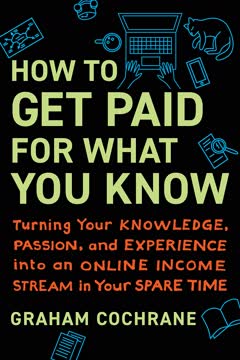
Ideas clave
1. Comercio del Conocimiento: Tu Experiencia es una Mina de Oro
Lo creas o no, ya posees el conocimiento, la pasión y las habilidades para crear un ingreso automatizado que no requiere título universitario, ni empleados, y menos de cincuenta dólares para comenzar.
Potencial sin explotar. Todos tenemos conocimientos, habilidades y experiencias valiosas que pueden monetizarse en línea. Esto es la esencia del comercio del conocimiento, una industria de 243 mil millones de dólares, donde la gente paga por acceder a la experiencia. No necesitas ser un genio tecnológico ni tener un MBA de Harvard; tu perspectiva única y saber hacer tienen valor.
Barrera de entrada baja. Emprender un negocio basado en el conocimiento es sorprendentemente accesible. A diferencia de los negocios tradicionales, requiere poco capital, ningún empleado y casi ningún gasto fijo. Esto lo convierte en una oportunidad ideal para quien busca un ingreso flexible, significativo y rentable.
- Bajo costo inicial
- Poco esfuerzo para comenzar
- No se necesitan empleados
Libertad y flexibilidad. El comercio del conocimiento ofrece la posibilidad de una vida libre y flexible. Puedes trabajar desde cualquier lugar, establecer tus propios horarios y hacer un trabajo en el que creas. Esto contrasta con la rutina tradicional de nueve a cinco, que a menudo deja a las personas insatisfechas y fuera de lugar.
2. El Círculo del Valor: Dar es la Clave para Recibir
Todas las grandes fortunas del mundo han sido creadas por hombres y mujeres que sentían más pasión por lo que daban—su producto, servicio o idea—que por lo que recibían.
Enfoque basado en el valor. El núcleo de un negocio exitoso basado en el conocimiento no es tomar, sino dar. Cuanto más valor ofrezcas a tu audiencia, más recibirás a cambio. Esta es la esencia del círculo del valor, un proceso cíclico de dar, vender, superar expectativas y recibir.
Los cuatro elementos del círculo del valor:
- Dar: Comienza ofreciendo contenido gratuito y valioso para atraer a tu audiencia ideal.
- Vender: Ofrece tus productos pagos a quienes se han beneficiado de tu contenido gratuito.
- Superar expectativas: Brinda más valor del prometido.
- Recibir: Gana ingresos y recomendaciones de clientes satisfechos.
La Ley de la Compensación. Tus ingresos son proporcionales a cuántas personas sirves y qué tan bien lo haces. Al enfocarte en aportar valor a otros, creas un negocio sostenible y rentable basado en la generosidad y el servicio.
3. Encontrando tu Idea Rentable: Pasión y Necesidad del Mercado
Nunca sigas tu pasión, pero siempre llévala contigo.
La pasión no basta. Aunque la pasión es importante, no es suficiente para construir un negocio exitoso. Tu pasión debe alinearse con una necesidad del mercado—algo por lo que la gente esté dispuesta a pagar. La clave es encontrar la intersección entre lo que amas, en lo que eres bueno y lo que la gente necesita.
Marco de rentabilidad en tres partes:
- Comienza con lo que sabes, amas y haces bien.
- Investiga a tus clientes para identificar sus problemas y deseos.
- Valida tu idea investigando el mercado y la competencia.
Conjunto de talentos. Combina tus diversas habilidades e intereses para crear una oferta única. No necesitas ser el mejor en una sola cosa, sino sobresalir en la combinación de varias. Esto te ayudará a destacar en un mercado saturado.
4. El Contenido es Rey: Atrae a tu Audiencia de Forma Orgánica
El secreto para construir una audiencia poderosa y el método que prefiero usar se llama marketing de contenidos.
El marketing de contenidos es clave. En lugar de depender de costosos anuncios pagados, enfócate en crear contenido gratuito y valioso que atraiga a tu audiencia ideal. Este contenido puede ser en forma de blogs, videos, podcasts o publicaciones en redes sociales.
Beneficios del marketing de contenidos:
- Es gratuito.
- Es perenne.
- Construye confianza y credibilidad.
- Se puede compartir.
- Es generoso.
Consistencia y valentía. El mejor contenido se entrega de forma constante y con opinión propia. No temas compartir tu perspectiva única y desafiar la sabiduría convencional. Esto te ayudará a destacar y atraer seguidores leales.
5. Tu Sitio Web como Imán de Prospectos: Captura, No Solo Muestra
El correo electrónico es más importante que las redes sociales.
El correo electrónico es más poderoso que las redes sociales. Aunque las redes sociales son excelentes para conectar con tu audiencia, el correo electrónico es la herramienta más efectiva para generar ventas. Los suscriptores de email son prospectos cálidos que han mostrado interés genuino en lo que ofreces.
Objetivo principal del sitio web. Tu sitio debe estar diseñado para capturar direcciones de correo, no solo para mostrar información. Usa un título atractivo y ofrece un imán de prospectos valioso a cambio de su email.
- Título enfocado en beneficios
- Llamado a la acción claro
- Oferta de imán de prospectos
Ejemplos de imanes de prospectos:
- Guía paso a paso
- Hoja de trucos o lista de verificación
- Cómo hacer con beneficios acumulados
- Guía definitiva
- Reto de varios días
6. Creando tu Producto: Transformación, No Solo Información
En realidad no vendes información—vendes transformación.
Enfócate en resultados. La gente no compra información; compra transformación. Tu curso en línea o membresía debe estar diseñado para ayudar a tus estudiantes a lograr un resultado específico o resolver un problema concreto.
Los cursos en video son ideales. Son fáciles de crear, actualizar y entregar. Además, permiten interacción y pueden tener un precio más alto que otros productos digitales.
- Fácil de construir
- Fácil de actualizar
- Enseña mejor con video
- Permite interacción
- Puedes cobrar más
La investigación es fundamental. Antes de crear tu producto, investiga a fondo qué quiere y necesita tu audiencia. Esto asegurará que tu producto sea valioso y deseado.
7. Lanzando tu Oferta: Vende con Autenticidad, No con Agresividad
Vender éticamente es simplemente dar a la gente lo que quiere y necesita.
Vender con integridad. Vender no tiene que sentirse agresivo o manipulador. Se trata de conectar con tu audiencia, entender sus necesidades y ofrecer una solución que les ayude.
Fórmula de ventas en tres pasos (PSA):
- Persona/Problema/Dolor: Identifica para quién es tu producto y qué problema resuelve.
- Historia/Lucha/Solución: Comparte tu experiencia y cómo tu producto puede ayudar.
- Pide la venta: Explica claramente qué quieres que hagan.
Precios escalonados. Ofrece varias opciones para tu producto que se adapten a diferentes necesidades y presupuestos. Esto puede aumentar el precio promedio de compra y brindar más valor a tus clientes.
8. La Automatización es Libertad: Construye un Motor de Ingresos Pasivos
Tu negocio debe servir a tu vida, no al revés.
El ingreso pasivo es real. Con los sistemas adecuados, puedes crear un negocio que genere ingresos incluso cuando no estás trabajando activamente. No se trata de pereza, sino de trabajar de forma más inteligente, no más dura.
Embudo de correos automatizados. Usa el email marketing para crear un sistema automatizado que nutra prospectos y venda tus productos. Esto implica una serie de correos preescritos que se activan cuando alguien se suscribe.
- Contenido valioso
- Colocación estratégica de productos
- Seguimiento constante
Negocio perenne. Al automatizar tu proceso de ventas, puedes crear un negocio que funcione 24/7, permitiéndote disfrutar de más libertad y flexibilidad.
9. Redes Sociales: Conecta, No Solo Vendas
Las redes sociales son excelentes para sondear a tu audiencia y obtener retroalimentación instantánea.
Las redes sociales son una herramienta de conexión. Úsalas para conectar con tu audiencia, construir relaciones y mantenerte presente. No las uses como herramienta principal de venta.
Enfócate en valor y compromiso. Comparte contenido valioso, haz preguntas y participa en conversaciones con tus seguidores. Esto te ayudará a construir una comunidad leal.
Dirige hacia tu imán de prospectos. Tu objetivo principal en redes sociales debe ser atraer tráfico a tu sitio web y capturar correos electrónicos. Usa tus publicaciones para promover tu imán y hacer crecer tu lista.
10. El Motor de Ingresos: Cuatro Acciones Clave para Crecer
Si quieres aumentar tus ingresos, la buena noticia es que está en tus manos—solo sirve a más personas.
Cuatro componentes esenciales:
- Crea contenido regularmente.
- Haz crecer tu lista de correo.
- Nutre tu lista de correo.
- Crea nuevos productos.
Esfuerzo constante. Enfócate en estas cuatro acciones semana tras semana. Esto impulsará tu negocio y generará ingresos constantes.
Crecimiento escalable. Al centrarte en estos componentes, puedes crear un negocio rentable y sostenible. Esto te permitirá escalar tus ingresos sin sacrificar tu tiempo ni libertad.
11. Simplemente Comienza: La Acción Vence a la Perfección
Puedes cambiar tu vida si aplicas lo que lees en este libro.
Supera el miedo. No dejes que el miedo al fracaso o el perfeccionismo te detengan. Lo más importante es simplemente empezar. No necesitas tener todas las respuestas ni un plan perfecto.
Comienza pequeño. No tienes que hacerlo todo de una vez. Da un paso pequeño y construye desde ahí. Incluso con solo treinta minutos al día, puedes avanzar.
La acción es clave. El conocimiento solo vale cuando se pone en práctica. No solo leas este libro; aplica lo aprendido y comienza a construir tu fuente de ingresos basada en el conocimiento hoy mismo.
Resumen de reseñas
Cómo cobrar por lo que sabes ha recibido en su mayoría críticas positivas, destacándose por sus consejos prácticos para monetizar habilidades mediante cursos en línea y la creación de contenido. Los lectores valoran la guía paso a paso, considerándola útil tanto para principiantes como para emprendedores con experiencia que buscan un repaso. Algunos señalan que el contenido resulta demasiado básico o repetitivo respecto a información ya conocida. El libro es elogiado por su estructura clara y fácil de seguir, su énfasis en prácticas comerciales éticas y el estímulo constante a los lectores. Aunque algunos críticos mencionan la promoción de herramientas específicas por parte del autor, la mayoría considera que el contenido general es valioso para iniciar y hacer crecer un negocio en línea.
También leyeron

 Inmersivo

 Inmersivo
Preguntas frecuentes
What's "How to Get Paid for What You Know" about?
- Overview: "How to Get Paid for What You Know" by Graham Cochrane is a guide to turning your knowledge, passion, and experience into an online income stream. It focuses on creating a business that allows for both financial success and personal fulfillment.
- Target Audience: The book is aimed at individuals looking to transition from traditional jobs to self-employment by leveraging their expertise in a digital format.
- Core Concept: It introduces the concept of knowledge commerce, where individuals can monetize their skills and knowledge through online courses, memberships, and other digital products.
- Outcome: By following the book's guidance, readers can create a sustainable online business that provides both income and flexibility.
Why should I read "How to Get Paid for What You Know"?
- Practical Guidance: The book offers a step-by-step plan for creating an online business, making it accessible even for those without prior experience in entrepreneurship.
- Empowerment: It empowers readers to believe in the value of their knowledge and skills, encouraging them to take action and start their own ventures.
- Proven Strategies: Graham Cochrane shares his personal journey from financial struggle to success, providing real-world examples and strategies that have worked for him.
- Flexibility and Freedom: The book emphasizes the potential for a balanced life, where one can achieve financial success without sacrificing personal time and well-being.
What are the key takeaways of "How to Get Paid for What You Know"?
- Value Circle: The book introduces the concept of the value circle, emphasizing the importance of giving value to receive value in return.
- Audience Building: Building an audience is crucial before creating and selling products. The book provides strategies for growing an audience through content marketing.
- Product Creation: It guides readers on how to create digital products like online courses and membership sites that align with their audience's needs.
- Automation: The book highlights the importance of automating business processes to create a passive income stream, allowing for more freedom and flexibility.
How does Graham Cochrane suggest building an audience in "How to Get Paid for What You Know"?
- Content Marketing: Cochrane emphasizes the use of content marketing to attract and build an audience. This involves creating valuable, free content that resonates with your target market.
- Consistency: Regularly publishing content is key to maintaining audience engagement and growing your reach over time.
- Engagement: Engaging with your audience through comments, social media, and email helps build trust and credibility.
- Lead Magnets: Offering lead magnets, such as free guides or checklists, can help convert audience members into email subscribers, which are more valuable for business growth.
What is the "Value Circle" in "How to Get Paid for What You Know"?
- Concept: The value circle is a business model that focuses on giving immense value at every touchpoint of your business to receive value in return.
- Four Elements: It consists of four elements: Give, Sell, Overdeliver, and Receive, all centered around the concept of value.
- Cycle of Awesomeness: Each element affects the others in a cyclical fashion, creating a continuous loop of giving and receiving value.
- Business Success: By focusing on adding value before, during, and after a sale, businesses can create loyal customers and sustainable success.
How does Graham Cochrane recommend pricing online courses in "How to Get Paid for What You Know"?
- Pricing Range: Cochrane suggests a price range of $50-$200 for most online courses, as this range provides the most profit with the least customer service hassle.
- Course Levels: He categorizes courses into mini courses ($47-$97), flagship courses ($97-$497), and premium courses ($497-$1,997), each with different levels of depth and content.
- Value Justification: The book advises pricing high and then justifying the price by clearly communicating the value and benefits of the course.
- Tiered Pricing: Offering multiple pricing tiers can increase revenue by allowing customers to choose the level of value they want to purchase.
What are the best quotes from "How to Get Paid for What You Know" and what do they mean?
- "You are sitting on a gold mine." This quote emphasizes the potential value of one's existing knowledge and skills, encouraging readers to recognize and monetize their expertise.
- "The more you give, the more you earn." This highlights the value circle concept, where generosity and value creation lead to business success and financial gain.
- "Your business should serve your life, not the other way around." This quote underscores the book's focus on creating a business that provides both financial success and personal freedom.
- "If you build it, they will (not) come." This challenges the assumption that simply creating a product will attract customers, emphasizing the importance of audience building and marketing.
How does "How to Get Paid for What You Know" address the fear of starting an online business?
- Acknowledging Fear: The book acknowledges that fear is a common barrier to starting a business and encourages readers to recognize and confront it.
- Starting Small: Cochrane advises starting small, with just 30 minutes a day, to gradually build confidence and momentum.
- Focus on Action: The emphasis is on taking action and starting, rather than waiting for the perfect moment or feeling 100% ready.
- Empowerment: By sharing his own journey and struggles, Cochrane empowers readers to believe in their potential and take the first step.
What role does social media play in "How to Get Paid for What You Know"?
- Connecting Tool: Social media is viewed as a tool for connecting with the audience, not primarily for selling products.
- Engagement: It provides a platform for engaging with the audience, gathering feedback, and building relationships.
- Lead Generation: Social media can be used to drive traffic to lead magnets, helping to grow the email list.
- Selective Use: Cochrane advises focusing on one or two platforms where the target audience is most active, rather than trying to be everywhere.
How does "How to Get Paid for What You Know" suggest automating your business?
- Email Funnels: The book emphasizes the use of automated email funnels to sell products to new subscribers, capitalizing on their initial interest.
- Content Overdelivery: Providing valuable content in the email sequence builds trust and primes subscribers for the product offer.
- Golden Window of Sales: The first seven days after a subscriber joins the list is the optimal time to pitch a product.
- Passive Income: Automation allows for the creation of a passive income stream, freeing up time and providing financial stability.
What is the "Income Engine" in "How to Get Paid for What You Know"?
- Four Components: The Income Engine consists of four core activities: creating regular content, growing the email list, nurturing the list, and building new products.
- Simplicity: It provides a simple, repeatable framework for maintaining and growing an online business.
- Focus on Essentials: By focusing on these four activities, business owners can drive growth and revenue without getting distracted by unnecessary tasks.
- Long-Term Success: The Income Engine ensures that the business remains sustainable and profitable over the long term.
What are some common misconceptions addressed in "How to Get Paid for What You Know"?
- Need for Perfection: The book dispels the myth that everything must be perfect before launching, emphasizing the importance of starting and iterating.
- Overemphasis on Social Media: It challenges the belief that social media is the most important tool for business growth, highlighting the value of email marketing.
- Complexity of Online Courses: Cochrane addresses misconceptions about the difficulty of creating online courses, showing that they can be simple and cost-effective to produce.
- Quick Success: The book counters the idea that success will come quickly, advocating for slow, steady growth and consistent effort.








































