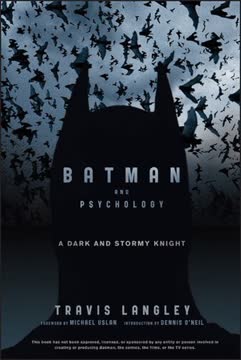
Ideas clave
1. La historia de origen de Batman refleja miedos y deseos humanos universales
"Nada más traumático"
Trauma universal. El asesinato de los padres de Bruce Wayne toca temores infantiles primarios sobre la pérdida y el abandono. Este evento traumático resuena con los lectores porque representa un miedo común a perder a quienes nos protegen y brindan seguridad.
El viaje del héroe. El origen de Batman sigue el arquetipo clásico del viaje del héroe:
- Separación del mundo ordinario (muerte de los padres)
- Iniciación/pruebas (entrenamiento para convertirse en Batman)
- Regreso con nuevos poderes (luchar contra el crimen en Gotham)
Esta estructura narrativa satisface el deseo humano de ver el triunfo del bien sobre el mal y el restablecimiento del orden en medio del caos. Batman encarna la fantasía de superar el trauma para volverse lo suficientemente fuerte como para proteger a otros de sufrimientos similares.
2. El Caballero Oscuro encarna tanto el trauma psicológico como la resiliencia
"Mi ira pesa más que mi culpa."
Respuesta al trauma. Batman muestra algunos síntomas de trastorno de estrés postraumático (TEPT), tales como:
- Recuerdos recurrentes e intrusivos del asesinato de sus padres
- Hipervigilancia y respuesta exagerada al sobresalto
- Entumecimiento emocional/desapego de los demás
Sin embargo, canaliza estos síntomas hacia su misión en lugar de dejarse paralizar por ellos.
Crecimiento postraumático. Batman demuestra una resiliencia notable e incluso crecimiento tras el trauma:
- Encuentra sentido y propósito en la lucha contra el crimen
- Desarrolla una empatía profunda hacia las víctimas
- Gana fortaleza psicológica y física
Su capacidad para transformar el sufrimiento en heroísmo conecta con la esperanza de los lectores de superar sus propios traumas y hallar fuerza en la adversidad.
3. La galería de villanos de Batman refleja aspectos de su propia psique
"A diferencia de tú y yo, el Joker parece no tener control sobre la información sensorial que recibe del mundo exterior. Solo puede lidiar con ese caótico bombardeo de estímulos dejándose llevar."
Espejos psicológicos. Los villanos de Batman suelen representar versiones exageradas de sus propios rasgos o temores:
- Joker: el caos y la locura que Batman teme en sí mismo
- Dos Caras: la dualidad entre Bruce Wayne y Batman
- Espantapájaros: la personificación del miedo mismo
Sombras internas. Estos enemigos permiten explorar los impulsos reprimidos y el "lado oscuro" de Batman sin dañar su estatus heroico. Plantean preguntas hipotéticas sobre su psique:
- ¿Y si perdiera el control? (Joker)
- ¿Y si cediera a impulsos vengativos? (Dos Caras)
- ¿Y si usara el miedo como arma? (Espantapájaros)
Al derrotar a estos villanos, Batman simboliza la superación de sus propios demonios internos, haciendo su heroísmo más complejo y psicológicamente satisfactorio para los lectores.
4. Los métodos del Cruzado Encapotado revelan un razonamiento moral complejo
"Elegí esta vida. Sé lo que hago. Y en cualquier momento podría dejar de hacerlo. Hoy, sin embargo, no es ese día. Y mañana tampoco lo será."
Dilemas éticos. La regla de no matar y sus métodos de vigilante plantean preguntas morales:
- ¿Es ético actuar fuera de la ley?
- ¿Negarse a matar pone en riesgo más vidas?
- ¿Son justificables sus tácticas basadas en el miedo?
Estos dilemas reflejan debates reales sobre justicia, seguridad y libertades civiles.
Desarrollo moral. El enfoque de Batman muestra un razonamiento ético sofisticado:
- Reconoce matices más allá del pensamiento en blanco y negro
- Se adhiere a un código ético personal pese a las tentaciones
- Evalúa las consecuencias de sus actos más allá de resultados inmediatos
Su lucha por mantener límites morales mientras combate el mal conecta con los desafíos éticos propios de los lectores y su anhelo de heroísmo con principios en un mundo complejo.
5. Las relaciones de Batman revelan su lucha con la intimidad y la confianza
"Bruce Wayne es una máscara que llevo puesta desde niño, pero se ha convertido en una carga, así que se acabó."
Problemas de apego. La dificultad de Batman para formar vínculos cercanos nace del trauma infantil:
- Miedo a la pérdida que conduce al distanciamiento emocional
- Problemas de confianza por la traición (asesinato de sus padres)
- Conflicto entre su misión y la vida personal
Dinámicas complejas. Sus relaciones muestran conflictos internos:
- Alfred: padre sustituto, representa su conciencia
- Robins: hijos sustitutos, simbolizan esperanza y legado
- Gatúbela: interés romántico, encarna la tentación de una vida "normal"
La lucha de Batman por equilibrar su misión con la conexión humana refleja temas más amplios de sacrificio, deber y el costo del heroísmo.
6. La evolución de Batman refleja las actitudes sociales hacia el heroísmo
"Caballero Oscuro, Caballero Luminoso"
Cambios en la representación. La imagen de Batman ha variado con el tiempo:
- Años 40-50: aventurero ligero y optimista
- Años 60: héroe televisivo camp
- Años 70-80: retorno a raíces más oscuras
- Años 90-2000: antihéroe psicológico complejo
Estos cambios reflejan la evolución cultural sobre la justicia, la moral y el heroísmo.
Comentario social. Cada época usa a Batman para explorar temas contemporáneos:
- Miedos de la Guerra Fría (años 60)
- Crimen urbano y corrupción (años 70-80)
- Terrorismo y vigilancia (2000)
Al adaptarse a las preocupaciones sociales, Batman sigue siendo relevante y conecta con audiencias de distintas generaciones.
7. Analizar a Batman ofrece perspectivas sobre la psicología humana
"No para el mundo en el que vive."
Lente psicológica. Examinar a Batman desde diversas teorías psicológicas brinda entendimiento sobre:
- Trauma y resiliencia
- Desarrollo moral
- Formación de identidad
- Estilos de apego
Este análisis permite a los lectores explorar conceptos psicológicos complejos a través de un personaje ficticio cautivador.
Espejo para la humanidad. Las luchas de Batman reflejan experiencias humanas universales:
- Superar el miedo y la adversidad
- Buscar sentido y propósito
- Equilibrar necesidades personales con responsabilidad social
- Enfrentar nuestros propios "lados oscuros"
Al adentrarse en la psique de Batman, los lectores obtienen una comprensión más profunda de sus propios procesos y motivaciones psicológicas. El personaje funciona como un estudio fascinante para explorar la condición humana en toda su complejidad.
Resumen de reseñas
Batman y la Psicología: Un Caballero Oscuro y Tempestuoso ha recibido en su mayoría críticas positivas, con lectores que elogian su combinación de psicología y el universo de Batman. Muchos lo encuentran educativo y entretenido, valorando el análisis profundo que Langley realiza sobre la psique de Batman y su galería de villanos. El libro es reconocido por su accesibilidad tanto para entusiastas de la psicología como para aficionados a los cómics. Algunos lectores mencionan pasajes ocasionalmente secos o una dependencia excesiva en ciertas teorías, pero en general, se considera una exploración fascinante del mundo de Batman desde una perspectiva psicológica.
También leyeron
Preguntas frecuentes
What's Batman and Psychology: A Dark and Stormy Knight about?
- Exploration of Batman's psyche: The book delves into Batman's psychological aspects, examining his motivations, fears, and the impact of witnessing his parents' murder. It discusses how these experiences shape his identity and drive his quest for justice.
- Analysis of villains: Travis Langley explores the psychological profiles of Batman's rogues gallery, including characters like the Joker, Scarecrow, and Harley Quinn. Each villain's backstory and mental state are analyzed to understand their motivations and behaviors.
- Integration of psychology and comics: The book combines comic book narratives with psychological theories, making it accessible to both fans of Batman and those interested in psychology.
Why should I read Batman and Psychology: A Dark and Stormy Knight?
- Unique perspective on superheroes: This book offers a fresh take on the superhero genre by applying psychological theories to well-known characters, providing insights into how trauma and mental health issues influence behavior.
- Engaging and informative: Langley presents complex psychological concepts in an engaging manner, making them relatable through the lens of Batman's story. Readers will find both entertainment and education in the analysis of their favorite characters.
- Cultural relevance: Understanding Batman's psychological depth enhances the appreciation of his stories, connecting the character's struggles to real-world psychological issues.
What are the key takeaways of Batman and Psychology: A Dark and Stormy Knight?
- Impact of trauma: The book emphasizes how traumatic experiences, like the murder of Bruce Wayne's parents, shape his identity and drive his actions as Batman.
- Duality of identity: Langley explores the conflict between Bruce Wayne and Batman, reflecting broader themes of identity and the masks people wear in society.
- Understanding villains: Insights into the psychological motivations of Batman's enemies illustrate how their backgrounds and traumas lead them to become villains.
What are the best quotes from Batman and Psychology: A Dark and Stormy Knight and what do they mean?
- “I wear a mask...”: This quote reflects Batman's understanding of identity and the power of persona, suggesting that the mask allows him to embody the qualities he wishes to project as a hero.
- “Some men aren’t looking for anything logical...”: Attributed to the Joker, this quote highlights the chaotic nature of some villains, underscoring the idea that not all motivations are rational.
- “Why do we fall, sir?”: This quote from Alfred encapsulates the theme of resilience, suggesting that failure and hardship are essential for personal growth and development.
How does Batman and Psychology: A Dark and Stormy Knight analyze Batman's trauma?
- Witnessing parental murder: The book details how Bruce Wayne's traumatic experience of seeing his parents murdered instills a deep sense of loss and drives his mission as Batman.
- Posttraumatic stress symptoms: Langley discusses the symptoms of PTSD that Bruce may experience, such as re-experiencing the trauma and emotional numbing.
- Coping mechanisms: The book explores how Batman copes with his trauma through vigilantism, channeling his pain into a quest for justice.
What psychological theories are applied in Batman and Psychology: A Dark and Stormy Knight?
- Freudian psychoanalysis: The book references Freud's theories on trauma and personality development, particularly how early experiences shape adult behavior.
- Cognitive development: Langley applies Piaget's stages of cognitive development to understand how Bruce Wayne's thinking evolves over time.
- Behaviorism and conditioning: The author discusses how behaviorism can explain the development of phobias and criminal behavior in Batman's enemies.
How does Batman and Psychology: A Dark and Stormy Knight portray Batman's relationship with his sidekicks?
- Mentorship and growth: The book highlights Batman's role as a mentor to his sidekicks, particularly Robin, allowing Bruce to develop his own emotional intelligence.
- Parental figures: Batman's sidekicks often serve as surrogate children, reflecting his unresolved issues with his own parents.
- Conflict and independence: The book addresses the conflicts that arise as sidekicks seek independence from Batman, reflecting broader themes of growth and autonomy.
What insights does Batman and Psychology: A Dark and Stormy Knight provide about Batman's villains?
- Complex motivations: The book delves into the psychological backgrounds of Batman's villains, illustrating how their traumas and experiences shape their criminal behavior.
- Psychopathy and personality disorders: Langley discusses how many of Batman's foes exhibit traits of psychopathy and other personality disorders.
- Symbolism of fear: The villains often embody different aspects of fear, reflecting Batman's own struggles.
How does Batman and Psychology: A Dark and Stormy Knight address the theme of duality in Batman's character?
- Bruce Wayne vs. Batman: The book explores the duality between Bruce Wayne's public persona and his identity as Batman.
- Moral ambiguity: Langley discusses how Batman's actions often blur the lines between heroism and vigilantism.
- Psychological conflict: The duality of Batman's character reflects his internal struggles with trauma, guilt, and the desire for revenge.
What role does Arkham Asylum play in Batman and Psychology: A Dark and Stormy Knight?
- Symbol of failure: Arkham Asylum represents the failures of the mental health system in Gotham City.
- Home for villains: The asylum serves as a home for many of Batman's most notorious foes, illustrating the blurred lines between sanity and insanity.
- Reflection of society: Arkham's chaotic environment mirrors the larger societal issues present in Gotham City.
How does Batman and Psychology: A Dark and Stormy Knight connect Batman's story to real-world psychological issues?
- Trauma and resilience: The book draws parallels between Batman's experiences and real-world trauma, emphasizing the importance of resilience.
- Mental health awareness: By exploring the psychological profiles of Batman and his villains, the book raises awareness about mental health issues.
- Coping strategies: Langley discusses various coping strategies employed by Batman and his foes, illustrating how different individuals respond to trauma and stress.
How does Batman and Psychology: A Dark and Stormy Knight compare Batman to Hamlet?
- Themes of revenge: Both Batman and Hamlet are driven by a desire for revenge, but their approaches differ significantly.
- Psychological depth: The book highlights the psychological complexities of both characters, suggesting that their motivations stem from deep-seated emotional conflicts.
- Defense mechanisms: Langley draws parallels between the defense mechanisms used by Batman and Hamlet, revealing the different ways individuals process grief and loss.








































