Ideas clave
1. Comprendiendo el TEPT Complejo: El Impacto del Trauma Infantil
El trastorno de estrés postraumático complejo (TEPT-C) es una respuesta a eventos traumáticos que fueron continuos o repetidos.
Los efectos duraderos del trauma infantil. El TEPT-C surge de experiencias traumáticas prolongadas o repetidas durante la infancia, como abuso, negligencia o exposición a violencia doméstica. A diferencia del TEPT por un solo evento, el TEPT-C afecta profundamente el desarrollo emocional y moldea las creencias que una persona tiene sobre sí misma, los demás y el mundo.
Síntomas centrales y manifestaciones. Los síntomas del TEPT-C incluyen:
- Conductas de evitación
- Recuerdos invasivos e intrusivos
- Síntomas depresivos
- Desregulación emocional
- Síntomas disociativos
- Dificultades interpersonales
- Problemas en la autoimagen
- Pensamientos distorsionados sobre los agresores
- Sentimientos de desesperanza y abatimiento
Comprender estos síntomas es fundamental para reconocer el TEPT-C y buscar el tratamiento adecuado. La sanación implica abordar cada área sintomática reconociendo su interconexión.
2. Reconociendo y Sanando los Síntomas de Evitación
La evitación implica conductas que te desconectan de recuerdos traumáticos dolorosos y de sensaciones o emociones incómodas.
Entendiendo la evitación. Los síntomas de evitación funcionan como mecanismos de protección que ayudan a las personas a sobrellevar emociones o recuerdos abrumadores relacionados con su trauma. Las conductas comunes de evitación incluyen:
- Aislarse
- Abuso de sustancias
- Exceso de trabajo
- Comer emocionalmente
- Disociación
Estrategias para sanar. Para superar la evitación:
- Practicar la atención plena en el momento presente
- Desarrollar conciencia sobre las conductas de evitación
- Crear distracciones saludables
Estas estrategias permiten reconectar con las emociones y experiencias de forma segura, reduciendo gradualmente la necesidad de evitar.
3. Manejo de los Síntomas Invasivos e Intrusivos
Invasivos se refiere a cómo estos síntomas invaden tu conciencia, e intrusivos a cómo afectan tu capacidad para sentirte seguro y relajado.
La naturaleza de los síntomas intrusivos. Los síntomas invasivos e intrusivos pueden manifestarse como:
- Flashbacks
- Pesadillas
- Hipervigilancia
- Ataques de pánico
- Emociones abrumadoras
Estos síntomas suelen generar una sensación constante de alerta o inseguridad, incluso en situaciones no amenazantes.
Estrategias para afrontarlos. Para manejar estos síntomas:
- Practicar técnicas de respiración restaurativa
- Desarrollar conciencia de los detonantes
- Usar estrategias de doble conciencia para mantenerse anclado en el presente mientras se procesan experiencias pasadas
Estas técnicas ayudan a recuperar el control y la sensación de seguridad en la vida diaria.
4. Superando los Síntomas Depresivos y la Desregulación Emocional
Los síntomas depresivos incluyen irritabilidad, pérdida de interés o placer en actividades antes disfrutadas, o sentir desesperanza sobre el futuro.
Entendiendo la depresión y la desregulación en el TEPT-C. Los síntomas depresivos y la desregulación emocional suelen originarse en sentimientos de impotencia y vulnerabilidad vividos durante el trauma infantil. Esto puede provocar:
- Dificultad para regular las emociones
- Cambios de humor intensos
- Sentimientos crónicos de vacío o inutilidad
Enfoques para sanar. Para abordar estos síntomas:
- Cultivar pensamientos útiles mediante la reestructuración cognitiva
- Practicar la aceptación y el procesamiento seguro de las emociones
- Realizar actividades físicas para liberar tensión y mejorar el ánimo
- Aprender habilidades de tolerancia al malestar
Estas estrategias ayudan a recuperar el equilibrio emocional y a desarrollar una visión más positiva de la vida.
5. Sanando los Síntomas Disociativos
La disociación es un comportamiento aprendido que te ayudó a sobrevivir y sobrellevar el estrés del trauma continuo.
El papel de la disociación. Los síntomas disociativos actúan como mecanismos de protección que permiten desconectarse de experiencias abrumadoras. Las experiencias disociativas comunes incluyen:
- Sentirse desconectado del propio cuerpo o emociones
- Tener lagunas en la memoria
- Percibir el mundo como irreal o como un sueño
Estrategias para la recuperación. Para sanar la disociación:
- Desarrollar conciencia de los síntomas disociativos
- Practicar técnicas de arraigo para mantenerse presente
- Usar estrategias de doble conciencia para procesar el trauma de forma segura
- Nutrir el sistema nervioso mediante actividades de auto-calmado
Estos métodos ayudan a reconectar con uno mismo y el entorno, manteniendo una sensación de seguridad.
6. Cultivando Relaciones Interpersonales Saludables
El trauma infantil puede generar patrones relacionales ineficaces, como culpar, criticar o alejarse innecesariamente de seres queridos.
Desafíos en las relaciones con TEPT-C. Las personas con TEPT-C suelen enfrentar:
- Problemas de confianza
- Miedo al abandono o a la intimidad
- Dificultad para establecer límites
- Codependencia o autosuficiencia excesiva
Construyendo conexiones más saludables. Para mejorar las relaciones:
- Trabajar en desarrollar estilos de apego seguros
- Practicar la comunicación asertiva y el establecimiento de límites
- Aprender a validar las propias emociones y experiencias
- Construir confianza gradualmente en relaciones seguras
Estas habilidades facilitan relaciones más equilibradas y satisfactorias.
7. Abordando Problemas de Autoimagen y la Sobreidentificación con los Agresores
Las experiencias de abuso o negligencia suelen conducir a la auto-culpa.
Impacto en la autoimagen. El trauma infantil puede provocar:
- Sentimientos de vergüenza y falta de valor
- Autocrítica severa
- Dificultad para reconocer las propias necesidades y deseos
- Sobreidentificación con los agresores (síndrome de Estocolmo)
Estrategias para sanar. Para mejorar la autoimagen y diferenciarse de los agresores:
- Practicar la auto-validación y la autocompasión
- Cuestionar creencias negativas sobre uno mismo
- Explorar y afirmar límites personales
- Trabajar en resolver sentimientos no resueltos hacia los agresores
Estos enfoques ayudan a desarrollar un sentido más saludable del yo y a recuperar la identidad separada del trauma.
8. Encontrando Esperanza y Sentido Después del Trauma
Puedes superar los sentimientos abrumadores de desesperanza y abatimiento trabajando el dolor del pasado y recuperando un sentido de propósito y significado en tu vida.
Abordando los desafíos existenciales. El TEPT-C puede generar:
- Pérdida de fe en uno mismo y en los demás
- Dificultad para encontrar sentido o propósito en la vida
- Sentimientos crónicos de desesperanza o abatimiento
Redescubriendo la esperanza y el sentido. Para superar estos retos:
- Explorar valores personales y fuentes de significado
- Practicar la gratitud y enfocarse en experiencias positivas
- Participar en actividades que promuevan un sentido de propósito
- Conectarse con comunidades o causas que brinden apoyo
Estas estrategias ayudan a reconstruir la esperanza y a encontrar un nuevo sentido en la vida tras el trauma. Recuerda que sanar es un camino, y está bien buscar ayuda profesional en el proceso.
Resumen de reseñas
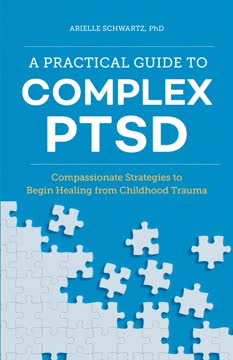
Una guía práctica para el TEPT complejo ha recibido opiniones variadas, con una calificación promedio de 4.22 sobre 5. Muchos la consideran útil como una introducción para comprender el TEPT complejo, especialmente para quienes enfrentan abusos o negligencia por parte de sus padres. Los lectores valoran los ejercicios prácticos y las estrategias de sanación que ofrece. Sin embargo, algunos críticos señalan que su alcance es limitado, ya que se centra principalmente en traumas familiares. Los lectores más avanzados pueden encontrar el contenido básico, mientras que los principiantes lo ven como un recurso valioso. El libro es elogiado por su enfoque compasivo, aunque también se le critica por la repetición y la falta de profundidad en ciertos aspectos.
También leyeron


Preguntas frecuentes
1. What is "A Practical Guide to Complex PTSD" by Arielle Schwartz about?
- Comprehensive C-PTSD Resource: The book is a compassionate, practical guide for understanding and healing from complex post-traumatic stress disorder (C-PTSD), especially as it relates to childhood trauma.
- Therapeutic Strategies: It offers research-based therapeutic strategies, including mindfulness, somatic psychology, cognitive behavioral therapy (CBT), and more, to help readers manage symptoms and reclaim their lives.
- Personal Stories and Exercises: The book includes composite client stories and step-by-step healing exercises to make the material relatable and actionable.
- Focus on Empowerment: Arielle Schwartz emphasizes that healing is possible and aims to empower readers to move from surviving to thriving.
2. Why should I read "A Practical Guide to Complex PTSD" by Arielle Schwartz?
- Expert Guidance: Arielle Schwartz is a clinical psychologist specializing in trauma, offering evidence-based, accessible advice for those with C-PTSD or supporting someone with it.
- Holistic Healing Approach: The book addresses mental, emotional, and physical aspects of trauma, providing a well-rounded path to recovery.
- Practical Tools: Readers gain actionable strategies for managing symptoms, improving relationships, and building self-compassion.
- Hope and Validation: The book validates the reader’s experiences and offers hope, showing that recovery is a gradual but achievable process.
3. What are the key takeaways from "A Practical Guide to Complex PTSD" by Arielle Schwartz?
- C-PTSD Is Treatable: With the right support and strategies, the effects of complex trauma can be managed and healed over time.
- Symptoms Are Adaptive: Many C-PTSD symptoms are learned survival mechanisms that can be unlearned and replaced with healthier coping skills.
- Healing Is Nonlinear: Recovery is a long-term, layered process that requires patience, self-compassion, and often professional support.
- Relationships Matter: Healing often happens in the context of safe, supportive relationships, whether with therapists, friends, or loved ones.
4. How does Arielle Schwartz define Complex PTSD (C-PTSD) in "A Practical Guide to Complex PTSD"?
- Result of Repeated Trauma: C-PTSD is described as a response to ongoing or repeated traumatic events, often beginning in childhood.
- Beyond Standard PTSD: It includes the core symptoms of PTSD (re-experiencing, avoidance, hypervigilance) plus additional symptoms like emotional dysregulation, impaired self-worth, and interpersonal difficulties.
- Attachment and Development: The book highlights how early relational trauma disrupts emotional development and attachment, leading to long-term effects.
- Learned Survival Strategies: Symptoms are seen as adaptive responses to unsafe environments, which can persist into adulthood.
5. What are the main symptoms and challenges of C-PTSD according to "A Practical Guide to Complex PTSD"?
- Emotional Dysregulation: Difficulty managing emotions, frequent mood swings, and intense feelings of anger, sadness, or numbness.
- Intrusive Symptoms: Flashbacks, nightmares, and persistent feelings of danger or hypervigilance.
- Avoidance and Dissociation: Withdrawing from people or situations, emotional numbing, and feeling disconnected from oneself or reality.
- Self-Perception and Relationships: Chronic shame, low self-worth, self-blame, and challenges in forming or maintaining healthy relationships.
6. What therapeutic approaches and healing strategies does Arielle Schwartz recommend in "A Practical Guide to Complex PTSD"?
- Cognitive Behavioral Therapy (CBT): Helps identify and change negative thought patterns and behaviors related to trauma.
- Dialectical Behavior Therapy (DBT): Focuses on mindfulness, distress tolerance, and emotional regulation skills.
- Parts-Work Therapies: Such as Internal Family Systems, to address internal conflicts and nurture the “adult self.”
- Somatic Psychology and EMDR: Emphasizes body-based awareness and trauma processing, including techniques like dual awareness and restorative breath.
- Complementary Approaches: Incorporates yoga, meditation, nutrition, and other mind-body practices for holistic healing.
7. How does "A Practical Guide to Complex PTSD" by Arielle Schwartz address avoidance and dissociation?
- Understanding Avoidance: The book explains avoidance as a survival strategy to escape emotional pain, which can manifest as isolation, substance use, or perfectionism.
- Dissociation Spectrum: Dissociation is presented as a continuum, from mild daydreaming to severe memory loss or identity confusion, all rooted in coping with overwhelming stress.
- Mindfulness and Grounding: Healing strategies include mindfulness of the present moment, peaceful place visualization, and sensory engagement to counteract avoidance and dissociation.
- Self-Awareness Practices: The book encourages compassionate self-observation to recognize and gradually reduce avoidance and dissociative behaviors.
8. What does Arielle Schwartz suggest for managing emotional dysregulation and depressive symptoms in C-PTSD?
- Distress Tolerance Skills: DBT-inspired practices help increase the ability to sit with difficult emotions without acting impulsively.
- Mindful Self-Compassion: Cultivating a compassionate inner witness to counteract the inner critic and negative self-talk.
- Embracing Emotions: Encourages feeling and expressing emotions like anger, fear, and sadness in healthy ways, rather than suppressing them.
- Movement and Somatic Release: Gentle physical activity, stretching, and somatic awareness are recommended to release emotional tension and uplift mood.
9. How does "A Practical Guide to Complex PTSD" by Arielle Schwartz help readers improve relationships and interpersonal skills?
- Attachment Theory Insights: The book explains how early attachment wounds affect adult relationships and offers hope for “earned secure attachment.”
- Parts-Work for Relationships: Strategies like anchoring the adult self and imagining reparative experiences help heal relational wounds.
- Healthy Boundaries and Assertiveness: Practical exercises teach readers to set boundaries, communicate needs, and assert themselves in relationships.
- Repair and Connection: Emphasizes the importance of repairing ruptures, practicing healthy relationship skills, and seeking supportive connections.
10. What does Arielle Schwartz say about self-perception, shame, and over-identification with abusers in C-PTSD?
- Origins of Shame: The book details how abuse and neglect foster toxic shame, self-blame, and a distorted sense of responsibility for the trauma.
- Healing Self-Perception: Strategies include validating emotions, somatic release practices, and recalling loving moments to rebuild self-worth.
- Differentiation from Abusers: Encourages readers to develop boundaries, assert their separateness, and “reset the responsibility” for abuse onto the abuser.
- Addressing Trauma Bonds: Explains concepts like Stockholm syndrome and trauma bonding, and offers tools to break free from unhealthy identification with abusers.
11. How does "A Practical Guide to Complex PTSD" by Arielle Schwartz address feelings of hopelessness and the search for meaning?
- Understanding Despair: The book explores how trauma can erode hope, meaning, and a sense of purpose, leading to existential loneliness.
- Building Positive Emotions: Readers are guided to enhance positive experiences, savor good moments, and gradually increase their tolerance for joy.
- Strengths-Based Reflection: Exercises help identify personal strengths, resilience, and growth achieved through the healing journey.
- Grit and Growth Mindset: Emphasizes perseverance, self-compassion, and the importance of viewing healing as a long-term, layered process.
12. What are the most powerful quotes from "A Practical Guide to Complex PTSD" by Arielle Schwartz, and what do they mean?
- "Healing is possible." – This core message is repeated throughout the book, affirming that recovery from C-PTSD is achievable with time, support, and the right strategies.
- "Your symptoms are the result of traumatic injuries that occurred over an extended period. It is important to be realistic about the timeline for healing." – Reminds readers to be patient and compassionate with themselves, recognizing that deep wounds require long-term care.
- "You can let go of the pain; you can learn to stand with unshakable confidence in the basic goodness of who you are." – Encourages reclaiming self-worth and moving beyond the shame and burdens of the past.
- "Courage is not the absence of despair; it is, rather, the capacity to move ahead in spite of despair." – Quoting Rollo May, the book highlights the importance of perseverance and courage in the healing journey.