Key Takeaways
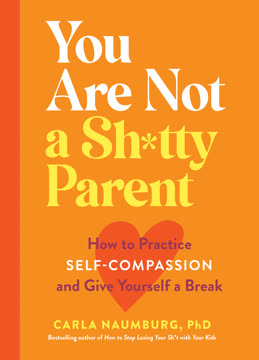
1. You Are Not a Sh*tty Parent: Embrace Self-Compassion
Self-compassion is the strategy that will help us find the solution, or at least the best way through the storm.
The core message. Many parents suffer from "Shitty Parent Syndrome" (SPS), a pervasive belief that they are failing, characterized by isolation, judgment, and self-contempt. This syndrome isn't about actual parenting quality but stems from societal pressures, overwhelming advice, and constant comparisons. Believing you're a shitty parent doesn't make anything better; it only exacerbates stress and hinders effective parenting.
A powerful antidote. Self-compassion is the essential tool to navigate the relentless challenges of parenthood. It's not a "feel-good baloney" but an active choice to respond to your struggles with understanding and acceptance. This approach helps you remain calm, think clearly, and respond creatively and confidently, even when faced with unfixable problems or societal issues beyond your control.
The two maps. Imagine being lost on a hike: one map tells you "You suck," while another says, "It's OK. Everyone gets lost sometimes. You'll figure this out." Self-compassion is that second map, offering a path to inner peace and resilience. It's a free, universally accessible strategy that transforms how you perceive and react to parenting difficulties, benefiting both you and your children.
2. Pain is Inevitable, Suffering is Optional: Dodge the Second Arrow
Pain is inevitable, suffering is optional.
The first arrow. Life, especially parenting, is full of "first arrows"—the inevitable chaos, confusion, and unpredictability that strikes without warning. These are the broken arms, canceled plans, unexpected bills, and global pandemics that cause genuine pain and demand our attention. We often try to prevent these arrows, but they are an unavoidable part of the human experience.
The second arrow. The real problem arises with the "second arrow"—the shame, blame, and contempt we hurl at ourselves after the initial pain. This self-inflicted suffering prevents healing, making us wallow in guilt and anxiety instead of seeking support or understanding. Examples include:
- Telling yourself, "I'm a terrible parent."
- Ignoring your own needs because you feel unworthy.
- Comparing your struggles to others' curated successes.
The third arrow. When the pain of the first and second arrows becomes too much, we reach for "third arrows"—denial and distraction. This might manifest as excessive eating, drinking, endless scrolling, or overworking. While offering temporary respite, these behaviors don't solve the underlying problems and often create new ones, perpetuating a cycle of suffering. Recognizing and avoiding these self-inflicted arrows is crucial for genuine healing.
3. Parenting is Inherently Chaotic: Let Go of the "Big Lie"
Chaos isn’t things going wrong; it’s just life doing its thing.
Embrace inherent chaos. Many parents operate under the "Big Lie"—the unrealistic expectation that parenting should be joyful, easy, and perfectly controlled, with happy, healthy children at all times. This societal narrative, fueled by filtered social media and "mouthy parenting experts," sets impossible standards. When reality inevitably falls short, we blame ourselves, believing something is fundamentally wrong with us or our kids.
Normalizing unpredictability. The truth is, families are natural systems, and chaos—unpredictability, confusion, disorder—is an inherent, permanent feature of raising children. It's not a sign of failure but simply "life doing its thing." Accepting this fundamental truth is a crucial step toward self-compassion, allowing you to navigate daily life with wisdom and humor rather than self-reproach.
Beyond perfection. Letting go of the "Big Lie" frees you from the exhausting pursuit of perfection. It allows you to see that scorched dinners, cranky kids, and misplaced permission slips are not personal failings but universal experiences. This shift in perspective reduces self-blame and opens the door to more effective, compassionate responses to the inevitable messiness of family life.
4. Recognize Your Freak-Outs: Beyond Fight or Flight
When our freak-outs are triggered by our second-arrow thinking, by our belief that we could and should be in control of an inherently chaotic situation, parenting gets harder, more stressful, and less manageable than it might have been otherwise.
Instinctual reactions. When faced with the chaos of parenting, our nervous system often interprets it as a threat, triggering primal survival responses. These "freak-outs" are not indicative of poor parenting but rather instinctual reactions to perceived danger. Recognizing these patterns helps ease the shame associated with them.
Expanded survival responses. Beyond the classic "fight or flight," modern parenting introduces several other common freak-out reactions:
- Fight: Instigating conflict, snapping at family members.
- Flight: Avoiding situations, disappearing into work, phones, or substances.
- Freeze: Procrastination, indecision, feeling numb or stuck.
- Flip out: Emotional outbursts, yelling, screaming.
- Fix: Obsessive problem-solving, micromanaging, seeking endless advice.
- Fawn: People-pleasing, bending boundaries to keep others happy.
Easing the shame. These reactions often feel out of control and disproportionate, leading to self-blame. However, understanding that they are automatic responses to an overloaded nervous system—often fueled by the belief that we should be in control—allows us to approach them with self-compassion. This awareness is the first step toward choosing a more intentional and effective response.
5. Noticing: Your Inner Ringmaster for Clarity
The ability to notice when your mind-monkeys start flinging second-arrow crap—without getting caught up in it—is a first and crucial step toward practicing self-compassion.
Directing attention. Just like a ringmaster directs the audience's attention, "noticing" is the ability to observe the chaos in your mind—the "mind-monkeys" flinging self-judgment—without getting swept away by it. This subtle but powerful shift in perspective creates distance from your thoughts, helping you remember that you're not responsible for controlling every aspect of life or your children's behavior.
Why it's challenging. Our brains are wired for quick reactions and multitasking, not for pausing and observing. Modern life, with its constant distractions and demands, further hinders our ability to notice intentionally. When overwhelmed, our survival instincts kick in, shutting down the very part of our brain responsible for mindful observation.
The STOP method. To cultivate noticing, practice the STOP acronym:
- Stop whatever you're doing.
- Take a breath to calm and focus.
- Observe your thoughts, feelings, bodily sensations, and freak-outs without judgment.
- Proceed with more clarity and intention.
This practice helps you identify when you're shooting yourself with second arrows and choose a compassionate response instead.
6. Connection: The Antidote to Parental Isolation
The knowledge—the deeply held, unshakable belief—that parenting is inconvenient and confusing and unpredictable for every single one of us is a game changer.
Breaking the isolation cycle. Many parents feel uniquely alone in their struggles, believing they are the only ones "messing up." This "I'm the only one" belief is a sharp arrow that reinforces shame and prevents seeking support. Modern societal factors, like the "air-conditioning effect" (less visibility into neighbors' lives) and curated social media, exacerbate this isolation.
Common humanity. Connection, particularly recognizing our "common humanity," is the powerful antidote to this isolation. It's the understanding that your chaos and struggles are what connect you to other parents, not what separates you. Shifting your internal dialogue from "I'm a terrible parent" to "We're all dealing with this" can significantly reduce feelings of overwhelm.
Strategies for authentic connection:
- Connect to trusted adults: Seek out friends, family, or professionals who listen without judgment and offer genuine support. Remember, "Never be scared alone."
- Connect to the present moment: When overwhelmed, ground yourself using your senses (e.g., the 5-4-3-2-1 method) to calm your nervous system.
- Disconnect from the bullshit: Actively disengage from people, social media, or situations that trigger self-doubt and judgment. Set firm boundaries to protect your mental space.
7. Curiosity: Unlocking Understanding, Not Judgment
Curiosity is an inherently kind response, and it’s often an incredibly useful source of important information.
Beyond snap judgments. Our brains instinctively jump to conclusions, especially when faced with uncertainty or perceived threats. This often leads to harsh self-judgment, shutting down any possibility for deeper understanding or effective problem-solving. Curiosity, in contrast, is the powerful antidote to this judgmental reflex.
The power of inquiry. Curiosity is about taking the time to explore your own experience and your child's, rather than immediately assigning blame or seeking to "fix" everything. It's like a kind grandparent asking, "So, what's going on?" and truly listening. This approach brings you back to the present moment, fostering clarity, creativity, and confidence.
How to cultivate curiosity:
- Start with yourself: Before addressing external situations, get curious about your own thoughts, feelings, bodily sensations, and needs (using tools like HALT or CALM).
- Avoid "why" questions: Instead of "Why did you do that?", ask "What were you thinking/doing?" to elicit more honest and insightful responses from your kids.
- Explore content and context: Delve into the specific worries (content) and the broader life circumstances (context) contributing to the situation. This helps you cut yourself slack and gain perspective.
8. Kindness: Your Fiercely Empowering Self-Care
Kindness isn’t a weakness. It’s fiercely empowering.
Kindness as a response to suffering. Kindness isn't just about being nice; it's an active choice to respond to suffering—your own or others'—with respect, understanding, and generosity. It's not about fixing problems or making feelings disappear, but about acknowledging pain and offering care. This is a crucial distinction from self-improvement, which often stems from a belief in fundamental flaws.
The power of non-fixing. A truly kind response often involves not trying to fix everything. Unsolicited advice, for instance, can imply fault and add to someone's burden. Instead, kindness means showing up, listening, and offering what you genuinely can, without overextending yourself or imposing solutions. This respectful approach validates the experience of suffering without judgment.
Cultivating inner kindness. Learning to treat yourself with kindness is like learning a new language. It involves:
- Kind self-talk: Replacing harsh self-criticism with compassionate internal dialogue.
- Kind stories: Crafting narratives about your experiences that are understanding and forgiving, rather than self-blaming.
- Singletasking: Focusing on one thing at a time to reduce overwhelm and stress, an inherently kind act for your brain.
- Setting boundaries: Saying "no" when you need to, protecting your time and energy, and respecting your own limits.
9. The Arrows of Kind Self-Care: Simple Acts for Resilience
Giving yourself even the most basic self-care is a powerful form of compassion, and compassion makes life and parenting so much easier and better and more sparkly.
Self-care is not self-improvement. These practices are about tending to your wounds and nourishing your well-being, not about fixing perceived flaws or achieving perfection. They are powerful alternatives to shooting yourself with second arrows of self-contempt. Even small, consistent acts of self-care build resilience and make daily life more manageable.
Ten arrows of kind self-care:
- Sip: Mindfully enjoy a soothing drink (water, tea, coffee), taking a moment for yourself.
- Snack: Nourish your body attentively, honoring hunger without judgment.
- Stretch/Soak: Respond to bodily tension or pain with gentle movement, a warm bath, or a massage.
- Snuggle: Seek out kind, connected physical touch from loved ones or pets.
- Song or Show: Engage in enjoyable entertainment (music, TV) mindfully, as a break, not a distraction.
- Sleep: Prioritize rest, as exhaustion significantly increases vulnerability to negative thoughts and reactions.
- Kind Self-Talk: Replace self-criticism with supportive internal dialogue.
- Kind Stories: Reframe challenging events with a compassionate narrative.
- Singletask: Focus on one activity at a time to reduce stress and improve presence.
- Set Boundaries: Say "no" to protect your energy and time, respecting your own needs.
Building resilience. These simple acts, when practiced regularly, become powerful injections of kindness that top off your emotional tank. They help you navigate the inevitable first arrows of life with greater ease, reducing stress and fostering a more compassionate relationship with yourself.
10. Compassion Your Kids: Build Connection, Not Control
That’s the magic of compassion: It decreases stress and tension, which allows us to get a little clarity on the situation, so we can solve problems and plan for the future without flexing our rules and boundaries, giving in to our kids, or letting them get away with anything.
Beyond punishment. When kids "screw up," the default parental reaction is often to freak out, lecture, or punish. However, this approach rarely teaches lasting skills; instead, it teaches kids to hide their mistakes. Compassion offers a more effective path: it reduces tension, fosters clarity, and strengthens relationships, enabling genuine learning and growth without sacrificing boundaries.
The SNACKS framework for kids:
- Stop: Pause what you're doing and give your child your full attention.
- Notice: Observe their behavior and your own reactions without judgment.
- Accept: Acknowledge where your child is right now, even if you don't like it.
- Connect: Prioritize connection before redirection. Listen, validate feelings, and share your own experiences.
- Kill them with Kindness: Offer a kind act (snack, snuggle, story, sleep) to soothe and support.
- Start Again: Revisit the issue when everyone is calm, focusing on solutions and future plans.
Modeling compassion. By consistently responding to your children's struggles with connection, curiosity, and kindness, you model invaluable life skills. They learn that mistakes are opportunities for growth, that feelings are normal and pass, and that seeking support is a strength. This approach helps them develop their own inner compassionate voice, preparing them to navigate life's inevitable challenges with resilience and self-understanding.
Review Summary
You Are Not a Sh*tty Parent receives mostly positive reviews, with readers praising its compassionate, conversational tone that feels like talking to a trusted friend. Many appreciate its focus on self-compassion and validation that parenting is genuinely hard. Common criticisms include repetitive content, excessive profanity, and the feeling that the core message could have been conveyed more concisely. Some readers found it too simplistic or felt the premise — that no parent is truly "shitty" — was overly broad. Overall, parents feeling overwhelmed or self-critical seem to benefit most from reading it.
People Also Read




 Immersive








































