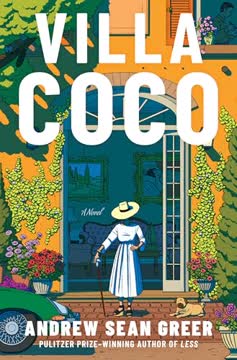
Plot Summary
Arrival in the Tuscan Hills
Geoffrey, a recent American college graduate, follows a cryptic telegram to a remote Tuscan station, burdened with books and doubts. Hired as an 'adjutant' to a mysterious Baronessa, he is met by Gazelle, a wild, elderly Lebanese driver, and Estelle, a glamorous, practical "neighbor." He expects romance and adventure, but instead finds himself among odd characters, cloistered in a ramshackle villa, tasked with cataloging its treasures. In a land layered with history, Geoffrey is both outsider and apprentice, stepping into a life he doesn't remotely understand, full of unknown rules and rituals.
The Baronessa and Her House
The villa is nothing as Geoffrey expected: not an aristocratic palace, but a labyrinth of objects, animals, and half-hidden stories. The Baronessa, Lisabetta—commanding, witty, fiercely independent—swiftly tests, confounds, and intimidates him. Her sharp demands and wild monologues are matched by a house teeming with pugs, cats, servants from across the world, and objects layered with meaning. Geoffrey is set adrift in a realm where order is always threatened by chaos, and the catalog—a supposed work of logic—is anything but straightforward.
Among Strangers and Stories
Geoffrey is swept up in the routines of the villa: elaborate dinners with Lisabetta and her best friend, the Principessa Pippa; enigmatic staff like Estelle, the cook Nimali, and the mysterious handyman Gazelle. Their tales intertwine—princesses losing sofas to queens, mistaken identities, glamorous pasts, and laughable cultural misunderstandings. Geoffrey is tasked with adapting, learning quickly that understanding another's language means more than just words—it means decoding history, personality, and pain.
Clashing Wills, New Tasks
Despite his training in archives, Geoffrey flounders among systems that make sense only to Lisabetta. The house and her demands override any attempts at order. He is sent on impossible tasks, managing failing plumbing, stubborn dogs, errant martens, and an erratic Italian language. Meanwhile, Lisabetta both belittles and depends on him, revealing deep loneliness behind her imperiousness. Their mutual challenges become a dance: servants and master, American and Italian, youth and experience.
Lessons in Culture and Chaos
Geoffrey immerses himself in the villa's routines—learning Italian through suffering with cook Nimali's complaints, researching Italian novels under Lisabetta's relentless eye, and enduring quirky household rules. He befriends Estelle, learns about the region and himself, and clumsily uncovers the secrets embedded in the house—objects with tangled histories, paintings with unknown provenance, rooms with hidden stories. All the while, he measures himself against the dazzling, exasperating baronessa, trying to define who he is becoming.
The Art and Mystery of Value
Geoff learns that value in the villa is never absolute: the house is crammed with treasures and junk, all jumbled together. Lisabetta's stories imbue every item with meaning—what is worth something in money may be worth nothing in memory, and vice versa. Oscar, Lisabetta's dear friend, arrives—a charming, aging ex-artist and confidante, full of wisdom and regrets. Together, they debate what's real, what's fake, what matters. Geoffrey's cataloging becomes an exercise not in listing possessions, but in witnessing a lifetime's shifting narrative.
Encounters and Attractions
Geoffrey grows closer to Giacomo, Lisabetta's cousin—a fragile, intelligent man unhappily married in a world of secrets and arrangements. Their connection grows into a brief but profound love affair, shadowed by Italian custom, personal fears, and Giacomo's tangled loyalties. Oscar reveals his own romantic past and cautions against being 'lazy in love.' Geoffrey confronts choices about desire, duty, and how much of himself to risk in a land of perpetual indecision and compromise.
The Olive Harvest Begins
Autumn turns to winter; all hands—including Geoffrey—are conscripted into the olive harvest. The labor is physical, unglamorous, and communal, bringing together every resident in reluctant unity. Old local farmers, migrant workers, Lisabetta herself, and the American newcomer join in, forging a fleeting family. Small dramas play out among rakes, nets, and cold rain: confessions, subtle flirtations, and distance. The collected olives become a symbol—transformation through toil, tradition joining the new with the old.
Love, Secrets, and Italian Lessons
As Geoffrey's Italian improves, so does his access to the villa's fabric of secrets. He discovers Estelle's past, Nimali's ambitions, Lisabetta's youthful scandals, and the intricate mechanisms behind the villa's social world. The catalog is nearly done, but critical gaps—missing paintings, vanishing pearls, objects that move and disappear—hint at intrigue. Geoffrey confronts secrets: Lisabetta's motivations, Oscar's illness, and what's truly at stake behind her desire to complete the inventory.
Winter Approaches, Troubles Deepen
With the villa settling into the hush of winter, sorrows surface. Oscar's illness becomes apparent, and his absence leaves both Geoffrey and Lisabetta adrift. Estelle announces her plans to leave; Giacomo pulls away. Loss permeates the household: old pets die, objects are lost, staff depart. Geoffrey approaches Christmas facing the end of his assignment and a crossroads—return home, begin anew, or stay in a world that both rebuffs and defines him.
Losses, Legacies, and Goodbyes
Oscar's death affects everyone. Lisabetta's abrupt, even comic, plans for a funeral caper—stealing Oscar's ashes—unites Geoffrey in one last adventure. Villa Coco's future is revealed: the house and its contents are to be sold, secrets exchanged, fakes passed for real, all orchestrated as one final performance, a gesture of autonomy and defiance. Geoffrey must decide who he is apart from this world—including confronting Giacomo's offer of a new life in Milan.
The Last Caper: Venice
Lisabetta whisks Geoffrey to Venice for the final act: returning a stolen artifact, enacting revenge on old rivals, and launching herself into a self-made future. Between shadowy canals and luminous palazzos, Geoffrey faces truth: about the histories he has witnessed, the lines between real and counterfeit, and the kind of person he wants to become. As his time with Lisabetta ends, he is both accomplice and witness—the last person to see a legendary woman off to sea.
Choices, Endings, New Roads
On the edge of Christmas, Geoffrey stands at another threshold: part of him called to return home, part tempted to join Lisabetta and Estelle on a mythic voyage, part drawn to the possibility of a life with Giacomo. Ultimately, he resists all ready-made answers. Having learned from Lisabetta the trick of choosing, he weighs the comedy and tragedy intertwined in every life. As he watches Lisabetta sail off, Geoffrey steps into an uncertain freedom—no longer just an American or an employee, but someone ready for his own adventures.
The Trick to Life
The novel closes with Geoffrey contemplating the meaning of his months in Italy: the joys, sorrows, absurdities, and wisdoms of Villa Coco. He understands now the baronessa's greatest gift—showing that life's trick is choosing, even if that means leaping into folly. Legends and legacies fade; what matters is the capacity for reinvention, for caprice, for making one's story out of chaos and laughter. Villa Coco and its inhabitants become memories, yet their lesson—a spirited embrace of uncertainty—endures.
Analysis
Andrew Sean Greer's Villa Coco is a deceptively light yet emotionally resonant comedy about the necessity of change, the mutability of value, and the making—and unmaking—of home. Greer weaves a picaresque tapestry of misfits: a privileged but rootless young American, a defiant old noblewoman, her circle of exiles and accomplices, and a host of servants and rivals. Through farcical daily life, absurd rituals, and the quest to catalog a lifetime's artifacts, the book interrogates what it means to belong—nationally, emotionally, or aesthetically—to any place or person. The narrative's backdrop of vanishing aristocracy, shifting arrangements (romantic, familial, legal), and fake-or-real treasures mirrors contemporary anxieties about authenticity and self-invention. In the face of irretrievable loss—of youth, of love, of friends, of legacy—Greer's answer is not to mourn, or to freeze, but to dare the leap, to choose caprice, knowing that no choice is perfect and no home eternal. The lasting lesson—"the trick to life is knowing what you want"—balances freedom with responsibility, comedy with grief. For today's readers negotiating an unsettled, improvisational world, the book offers solace, laughter, and a gentle challenge: to build, and remake, one's story amid the confusion of other people's dreams and tales.
Review Summary
People Also Read






Characters
Geoffrey (Our Young Man)
Geoffrey, an American in his early twenties, travels to Italy to catalog a noblewoman's chaotic villa—fleeing a messy romantic history and searching for meaning. Awkward, thoughtful, and at times naive, he is both observer and participant, gradually absorbing the villa's logic and Italy's labyrinthine social codes. His relationships—with the Baronessa, Estelle, Oscar, and Giacomo—force him to confront his own desires, fears, and limitations. Over his months at Villa Coco, Geoffrey's perspective deepens from comic bewilderment to genuine insight. He is transformed from a rule-following outsider into a more flexible, self-directed adult, learning not simply to 'take life seriously' but to laugh, risk, and choose for himself.
Lisabetta (The Baronessa, "Coco")
The Baronessa is the charismatic, unpredictable heart of Villa Coco: fiercely intelligent, imperious, and impervious to convention. Her life is a patchwork of privilege, loss, invention, and scandal—her "treasures" as much stories as objects. She rules the villa through caprice, creating order by way of chaos, collecting both artifacts and people (friends, lovers, staff from every continent). Behind her grandeur, she is vulnerable: haunted by age, loss, and the prospect of irrelevance. Her affection for Geoffrey is at first conditional, but deepens into trust and even pride. Her ultimate act—selling the villa, launching one last adventure—shows a lifelong refusal to be pinned down, and a final lesson for those around her: the necessity of deciding what, and how, to live.
Oscar
Oscar is Lisabetta's oldest confidante—an aging gay artist and dealer, wit and philosopher, marked by old wounds and daily joys. He bridges the comic and tragic: once a youthful bohemian, now resigned to moderation due to frail health and a long-ago heartbreak. His friendship with Geoffrey and Lisabetta is deeply nurturing, instructive, and subtly cautionary; he imparts the wisdom to 'not be lazy in love.' Facing mortality, Oscar delights in small pleasures yet mourns missed opportunities and lost beauty. His death crystallizes the themes of loss, memory, and seizing happiness.
Estelle
Estelle, an artist of Algerian-Italian descent, is both neighbor and emotional linchpin of Villa Coco. Sharp, quietly nurturing, and unillusioned, she serves as a bridge between the old order and contemporary reality. Her backstory—caught in love triangles, self-exiled, and protective of Lisabetta—adds depth to the novel's questions about belonging and love. She is both accomplice and challenger, urging Geoffrey to embrace risk and change. Ultimately, her decision to join Lisabetta at sea signals her own pursuit of a new life.
Giacomo
Giacomo, Lisabetta's distant cousin, is gentle, awkward, and trapped: his marriage is a social arrangement designed for appearances, hiding a clandestine gay world. Attracted to Geoffrey, he is drawn into a brief, liberating affair, but cannot transcend familial or cultural expectations. His desire for a found family—inviting Geoffrey to join a complex new household—exposes both Italy's contradictions and the universal yearning for love and acceptance. His fate is open-ended, marked by melancholy, kindness, and hope.
Nimali
The Sri Lankan cook, loyal but outspoken, is a minor but memorable character. Her mornings with Geoffrey, teaching him Italian while complaining about life, ground the villa's drama in everyday struggle. Her resistance to class and gendered expectations, including language itself, mirror larger questions about adaptation and agency.
Vinsanda (Vinsanto)
Nimali's husband, the villa's handyman, represents the immigrant presence at the estate. Often the silent, practical counterpart to the house's chaos, his relationship with Nimali, labor on the land, and under-the-surface discontent reinforce the undercurrents of migration and service at play in the narrative.
Gazelle (Ghazel)
The Lebanese groundskeeper, known for his energetic incomprehensibility and delight in chaos, is both comic relief and a portrait of displacement. His failed schemes (wall of dogs, marten traps) and hybrid language embody the villa's spirit of improvisation, misunderstanding, and endurance.
The Principessa Pippa
Lisabetta's old friend and foil, Pippa, is a princess in name and temperament; her elaborate, comical past—schemes with the queen, love affairs, a menagerie of pets—serves to satirize and humanize the old world of nobilità. Her role in the grand caper at the novel's close symbolizes the collusion of fantasy and survival.
Furman Childress (Pullman)
An old American acquaintance, now rich through ambiguous means, Pullman is both comic antagonist and warning: living in the past, obsessed with old rivalries, he represents what happens when one refuses to move forward. His acquisition of the villa (and its forgeries) is the final act of a lifelong rivalry with Lisabetta.
Plot Devices
Cataloging as Metaphor
The task of creating a catalog for Villa Coco structures the plot and stands in for broader questions: What is worth recording? How does value change? Every character, object, and story surfaces through Geoffrey's attempts at documentation—and every effort to create order is subverted by the will of people and memory. The catalog is never complete, and its failures are as instructive as its contents.
Comedy and Farce
Villa Coco is sustained by layers of comedic misunderstanding, from language mix-ups (American/Italian) to rites and superstitions (hats on beds, truffle rituals). These comic routines are not merely for entertainment—they are survival strategies, ways of evading pain, loss, and change. The pivot from farce to profundity is central, turning every mishap into an opportunity for connection and self-recognition.
Displacement and Found Family
The villa gathers an odd, cosmopolitan mix of displaced persons: immigrants, exiles, the queer, the lonely rich, and the wandering American. Together, they momentarily create a surrogate family, blurred by language, status, and desire. The receding, conditional nature of belonging is underscored by departures and shifting allegiances.
Counterfeit and Authenticity
The swapping of treasures for fakes, the mystery of which art is "real," and lists written to mislead—these motifs invite questions about truth, identity, and self-invention. Lisabetta's final caper—selling the villa's contents as part of a grander con—mirrors the fluidity of her own identity and the roles played by everyone at Villa Coco.
The Caper and the Last Adventure
Lisabetta's plan to stage a last caper around her friend Oscar's death, battle Pullman, and escape to sea fuses themes of performance, autonomy, and defiance. The suspense and fun of the scheme serve as both narrative engine and existential statement: life's meaning is found in the stories we choose to enact, even—especially—when the world is ending.
Modern Picaresque Structure
The novel is structured around Geoffrey's literal and figurative journey: arrival, immersion, crisis, loss, and movement onward. Episodes ebb and flow in a loose, comic style, full of asides, anecdotes, and diversions—even as the stakes of memory, love, and mortality heighten. Each chapter is a new country, echoing Lisabetta's motto: "Days are like countries; they will change tomorrow."
Foreshadowing and Reflection
Early references to missing objects, vanishing roads, the migration of flamingos, and departures pulse beneath the comic surface. The pronouncement that Lisabetta will not die in the villa, Oscar's warnings about laziness in love, and Estelle's secrets all prime readers for inevitable loss, transformation, and self-reckoning.








































