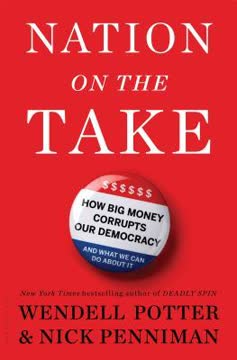
Key Takeaways
1. America's Self-Government Derailed by a "Coin-Operated System."
Our grand 240-year-old project of self-government has been derailed, replaced by a coin-operated system that mainly favors those who can pay to play.
Founding ideals. The American Enlightenment envisioned a democratic republic where ultimate power rested with citizens, ensuring government for the common good, not private interest. Documents like the Declaration of Independence emphasized the people's right to institute and reform government for their safety and happiness. This foundational dream is now perceived as broken, with leaders seen as agents of the wealthy.
Profound shift. A slow but profound shift has eroded public faith. Collective power is eclipsed by a rigged system dominated by billionaires and special interests. This internal threat, akin to an oligarchy, concerned the Founding Fathers, who worried about systemic corruption—the bending of governing priorities away from the common good.
Crisis of trust. Americans increasingly feel sidelined, believing their government is "coin-operated." This crisis is not just about individual bad actors but a systemic rot damaging the democratic republic. While other factors like gerrymandering contribute, "Big Money" exacerbates these issues, eating away at the country's core.
2. A Long History of Money's Influence Culminating in Modern "Dark Money."
Money has a long history in American politics.
Early influence. From George Washington's 1758 election, where he plied voters with booze, money has played a role. The late 19th century saw figures like Marcus Alonzo Hanna pioneer large corporate contributions for campaigns, notably for William McKinley in 1896. This marked a watershed moment, with unprecedented spending levels.
Reform attempts. Early 20th-century reforms, like the Tillman Act of 1907, banned corporate contributions, driven by President Teddy Roosevelt. Subsequent laws aimed to restrict spending and mandate disclosure, though often with loopholes. The Hatch Act targeted federal employees, and the Smith-Connally Act banned union contributions, leading to the creation of PACs as a workaround.
Modern escalation. The Federal Election Campaign Act (FECA) and the FEC aimed for stronger enforcement, but Buckley v. Valeo (1976) equated spending with free speech, limiting regulation. This led to "soft money" in the 1990s and Citizens United (2010), allowing unlimited corporate/union spending. This, with SpeechNow.org v. FEC, birthed Super PACs and fueled "dark money" from undisclosed 501(c)(4) organizations, dramatically increasing untraceable political spending.
3. The "Rigged" System: Lobbying, Fundraising, and the Revolving Door.
It’s unfortunately the world we live in.
Escalating costs. Federal election costs quadrupled since 1998, reaching $6.2 billion by 2012. Lobbying expenditures exploded from $30.4 million in 1960 to $3.23 billion in 2014. "Influence" is now Washington D.C.'s third-largest industry, with businesses outspending taxpayers on congressional salaries and expenses.
Politicians' time. Members of Congress are trapped in a "permanent campaign," spending roughly 50% of their time fundraising in "sweatshop"-like call centers or at lavish "destination events" with lobbyists. This distracts them from legislative duties, limits cross-aisle collaboration, and deters good people from running.
Revolving door. Many former House/Senate members (around half) and staff transition directly into lobbying, often for industries they once oversaw. This "revolving door" creates a lucrative pathway from public service to influence-peddling, entrenching special interests. Lobbyists provide campaign cash, creating a system where access and influence are bought.
4. The Rise of Oligarchy and Political Paralysis.
The campaign finance system is now completely in control of the super-wealthy on both the left and the right.
Billionaire donors. The post-Citizens United era has seen a brazen rise of a billionaire donor class, with contributions from the top 0.01% nearly tripling. Figures like Sheldon Adelson and the Koch brothers wield immense power, vetting presidential candidates and pledging hundreds of millions. This concentration of wealth pushes America towards "plutocracy" or "oligarchy," as noted by Warren Buffett and former Republican insiders.
Policy distortion. Research shows that when the wealthy support a policy, it has a 45% chance of becoming law, but only 18% if they oppose it, even with majority public support. This indicates the American public has little influence, threatening democratic claims. The wealthy accumulate more political power, leading to a less inclusive and equitable country.
Gridlock and cronyism. This system fuels polarization and gridlock, making Congress historically unproductive. "Dark money" groups, with no brands to protect, contribute to extreme messaging. This environment fosters "crony capitalism," where powerful interests manipulate rules for private gain, undermining competition and widespread prosperity. This creates a "rigged" economic game, benefiting the well-connected.
5. Wall Street's Unchecked Power: "Too Big to Beat."
The banks—hard to believe in a time when we’re facing a banking crisis that many of the banks created—are still the most powerful lobby on Capitol Hill. And they frankly own the place.
Financial crisis origins. The 2008 financial crisis, deemed "avoidable," stemmed from decades of deregulation and self-regulation. Lawmakers, beholden to bank lobbyists, failed to implement safeguards. The 1999 repeal of the Glass-Steagall Act, after lobbying by figures like Sandy Weill and Citigroup, removed a critical firewall, setting the stage for the meltdown.
Bailout and aftermath. The $700 billion TARP bailout saw financial interests spend over $450 million lobbying to shape the package, ensuring no taxes on institutions or mortgage renegotiation for homeowners. While banks quickly recovered, posting record profits, millions of Americans faced job losses and foreclosures. The Dodd-Frank Act, the major legislative response, was heavily influenced by lobbyists, leaving underlying causes unaddressed.
Continued influence. The financial sector remains the largest source of federal campaign contributions, pouring $3.89 billion since 1990. The House Financial Services Committee, dubbed the "Cash Committee," is a prime target for industry influence, with many staffers moving through the revolving door. Efforts like "cramdown" legislation to help homeowners were repeatedly defeated by the banking lobby, demonstrating their enduring power.
6. Big Pharma's Grip: "Drugged" Americans Pay the Highest Prices.
Americans pay far more for their prescription medications than citizens of any other country.
Exorbitant drug costs. Americans pay almost 40% more for prescription drugs than Canadians and twice as much as many European countries. This drives up health insurance premiums and out-of-pocket costs. PhRMA, the powerful trade group, has successfully lobbied to prevent Medicare from negotiating drug prices, unlike the VA, which pays 40% less for similar medications.
Lobbying and the revolving door. PhRMA is consistently among Washington's top lobbying spenders, with $275 million in 2009 alone. Former Congressman Billy Tauzin famously became PhRMA's CEO at a $2 million salary shortly after helping pass the Medicare Part D drug bill in 2003. This bill, crafted with industry input, added billions to the deficit without cost containment, benefiting drug companies.
Undermining reform. Despite campaign promises, President Obama's Affordable Care Act boosted drug company profits by abandoning drug reimportation and Medicare negotiation in exchange for industry support. This pattern continues, with new specialty drugs like Sovaldi (a $1,000-a-day hepatitis C pill) priced arbitrarily high, despite taxpayer-funded research contributing to their development.
7. Fossil Fuel Follies: Industry Dominance in Energy Policy.
Our current national energy policy is a hodgepodge of special interest favors granted to companies, and sometimes whole industries, paying homage to lobbying efforts and political contributions as surrogates for sound, decisive policy.
Lack of coherent policy. The U.S. lacks a clear national energy policy, instead relying on "Christmas tree" bills with industry-specific tax breaks. This fragmented approach, driven by powerful consortia like Big Coal and natural gas, frustrates long-term business planning and hinders progress on national security and environmental goals. Political will is sidetracked by industry money despite scientific consensus.
Coal's resistance. The coal industry has historically fought environmental regulations, such as mercury emission standards. The Bush administration, aided by $20 million in contributions, rolled back Clinton-era MACT rules. Lobbyists like Jeffrey Holmstead, who moved from EPA to representing polluters, exemplify the revolving door that undermines public health protections.
Fracking's rise and influence. The natural gas industry, with fracking, replicated coal's playbook. In Pennsylvania, the industry poured millions into political campaigns, influencing governors and legislators to resist taxes and weaken environmental oversight. This led to issues like groundwater contamination and obscured transparency regarding fracking chemicals, demonstrating money's power at state and local levels.
8. Big Food's Influence: "Fat Wallets, Expanding Waistlines."
The food and beverage industries won fight after fight during the last decade. They have never lost a significant political battle in the United States.
Obesity epidemic. America faces a severe obesity epidemic, with over two-thirds of adults overweight or obese, and 17% of children. This increases disease risks and could shorten life expectancy. While "aggressive strategies" like nutritious diets are known, their implementation is hampered by powerful industry influence.
Lobbying against health. The food and beverage industry spent nearly $92 million lobbying Washington in 2014, dwarfing public health advocates. This financial disparity allows them to distort debates on healthy eating. Efforts to establish voluntary federal guidelines for marketing food to children were successfully blocked by a coalition of food, beverage, and media companies, despite overwhelming public support.
School lunch battles. Even the Healthy, Hunger-Free Kids Act of 2010 faced intense industry lobbying. Food companies, allied with the School Nutrition Association, fought against rules on sodium, whole grains, and even pizza as a vegetable. This resulted in congressional riders weakening standards, despite USDA reports showing success and improved student eating habits.
9. Chemical Industry's Delays: "Enough to Make You Sick."
What most Americans don’t realize is nobody’s looking out for their welfare.
Unregulated toxins. Most of the 80,000 chemicals in consumer products remain untested and unregulated, posing significant public health risks. Formaldehyde, a known carcinogen, is ubiquitous. Despite a 2010 law mandating formaldehyde emission standards, industry lobbying and political allies have delayed final EPA regulations for years, leaving consumers exposed.
Delay tactics. The chemical industry, led by the American Chemistry Council, employs a "delay, delay, delay" strategy. This involves questioning science, objecting to EPA processes, and leveraging political connections to push for lengthy reviews. Lobbyists like Charlie Grizzle, a former EPA official, have influenced lawmakers to halt chemical assessments.
Consequences and costs. This inaction has severe consequences. Arsenic, for example, is far more dangerous than previously thought, yet its regulation is stalled. The economic costs of chemical toxicity are staggering, with IQ losses from lead, mercury, and pesticides estimated at $120 billion annually. The industry's ability to spend "whatever it takes" ensures future generations remain exposed.
10. Democracy is Fixable: A Four-Pillar Framework for Reform.
Winning back American democracy is not a logistical or technical challenge, it’s a matter of political will.
Reclaiming democracy. Despite cynicism, fixing America's "coin-operated" government is achievable. It's about rebalancing power, prioritizing Main Street, and giving public-interest legislation a fair chance. This requires constant vigilance, recognizing that democracy demands continuous improvement, not perfection.
Overcoming obstacles. While Citizens United was a setback, its limitations are not fatal. A three-pronged legal effort aims to clarify its misinformed aspects, reassert Congress's duty to prevent systemic corruption, and nominate judges aligned with public opinion. This acknowledges that the Supreme Court can be swayed by time and public will.
Four pillars of reform. Legislative fixes, achievable now, fall into four categories:
- Everyone Participates: Citizen funding programs (Clean Elections, Matching Funds) redirect politicians' loyalty to constituents.
- Everyone Knows: Mandatory, real-time disclosure of all political spending, especially "dark money," ensures transparency.
- Everyone Plays by the Same Commonsense Rules: Bans on lobbyist campaign contributions and stricter "revolving door" ethics laws reduce conflicts of interest.
- Everyone Is Held Accountable: Reforming dysfunctional enforcement agencies like the FEC, drawing inspiration from effective state models, ensures laws are upheld.
11. An All-American Movement: Reclaiming Our Right to Self-Government.
This is an all-American cause. A democratic republic is the hardware that all of our software runs on.
Call to rebellion. America's history is marked by powerful movements that transformed democracy. The current fight against cronyism and for self-government can be the next historic chapter. A growing, bipartisan movement recognizes that a functional democracy is essential for all other societal progress.
Changing the narrative. The debate must shift from abstract "campaign finance reform" to a "governing crisis" directly impacting daily lives. Acknowledging cynicism while rejecting resignation is crucial. Connecting political manipulations to kitchen-table issues—foreclosures, drug costs, health problems—motivates people to fight. Making this issue central to every political contest is vital.
Grassroots momentum. Organizations like Common Cause, Issue One, and Take Back Our Republic build diverse coalitions, proving reform isn't just a "left-wing pet project." Winning at state and local levels, through legislation and ballot initiatives, creates momentum and hope. These "first flames of a prairie fire" will eventually reach Washington D.C., paving the way for comprehensive citizen-funded systems, ensuring a government truly "of the people, by the people, for the people."
Review Summary
Reviews for Nation on the Take are largely positive, averaging 3.97/5. Readers praise its thorough examination of big money's corrupting influence on politics, covering industries like pharma, banking, and food. Many found it eye-opening and depressing, though appreciated the practical solutions offered in the final chapters. Common criticisms include perceived political bias, an overemphasis on Citizens United, and skepticism that proposed solutions are achievable. Several readers noted the book's broad scope while wishing for more balanced coverage of wealthy donors across the political spectrum.








































