Résumé de l'intrigue
Two Mothers, Two Worlds
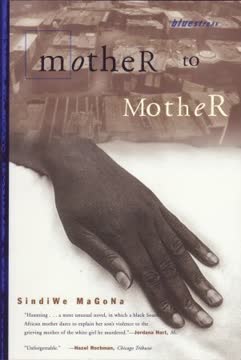
The novel opens with Mandisa, a black South African mother, addressing the mother of Amy, a white American student murdered in Guguletu township. Mandisa's son, Mxolisi, is implicated in Amy's death. The narrative is a letter, a plea, and a confession, as Mandisa tries to explain the world that shaped her son and led to this tragedy. She imagines Amy's mother's pain, while grappling with her own shame and grief. The two mothers are bound by loss, but separated by race, history, and circumstance. Mandisa's voice is raw, defensive, and searching, as she seeks understanding for herself and, perhaps, forgiveness from the other mother.
Ordinary Day, Unthinkable Tragedy
The story shifts to the day of Amy's murder. Both mothers begin their mornings with routine: Mandisa prepares for work, Amy for her last day in South Africa. Amy is full of plans, farewells, and optimism, while Mandisa's day is shaped by the grind of poverty and the absence of her children at school due to political unrest. The ordinariness of the day is sharply contrasted with the violence that will erupt. The chapter builds a sense of foreboding, as the reader knows what is coming, but the characters do not.
Township Mornings, Unseen Dangers
Mandisa describes her family's morning rituals, the challenges of raising children in a township, and the constant threat of violence and deprivation. The children are restless, the schools are closed due to student protests, and the community is on edge. Mandisa's authority as a mother is undermined by her absence and the chaos of township life. The chapter paints a vivid picture of the environment that shapes young people like Mxolisi—an environment of neglect, anger, and simmering rebellion.
The Mob and the Mazda
Amy, driving her friends home to Guguletu, becomes the target of a mob. The crowd, fueled by slogans and rage, singles out the yellow Mazda with a white woman inside. The mob's energy is chaotic, collective, and unstoppable. Amy and her friends are trapped, their pleas for mercy drowned out by chants of "One settler, one bullet." The violence is sudden and overwhelming. Mxolisi is swept up in the frenzy, his individual will subsumed by the crowd. The chapter is a harrowing account of how ordinary people can become agents of horror.
Aftermath: Guilt and Grief
News of the murder spreads quickly. Mandisa learns of the killing through rumors and neighbors. The township is abuzz with fear and speculation. Mandisa's anxiety for her son grows as she realizes he is missing and the police are searching for him. The community is both complicit and terrified, aware that the killing of a white woman will bring harsh reprisals. Mandisa's grief is compounded by shame and the knowledge that her son's life, and her own, are forever changed.
Roots of Violence
Mandisa reflects on the history of forced removals, poverty, and systemic violence that have shaped her community. She recounts the trauma of being uprooted from her childhood home, the loss of community, and the struggle to survive in Guguletu. The chapter explores how apartheid's policies have created a generation of angry, alienated youth. Mandisa sees her son as a product of this environment—a child who never had a chance to be innocent.
Forced Removals, Broken Homes
The narrative delves into Mandisa's childhood, the forced removal from Blouvlei to Guguletu, and the fracturing of close-knit communities. The trauma of displacement is shown to have lasting effects on families and children. Mandisa's own mother is unable to provide the stability and support she needs, and Mandisa's early life is marked by loss, confusion, and a longing for home. The chapter underscores how state violence begets personal tragedy.
Girlhood Lost, Motherhood Forced
Mandisa recounts her adolescence, her mother's obsessive attempts to protect her from boys, and the bewildering experience of becoming pregnant while still a virgin. The pregnancy is a source of shame and conflict within her family. China, the boy she loves, rejects her, and Mandisa is forced into a loveless marriage. The chapter is a poignant exploration of how girls' lives are derailed by circumstances beyond their control, and how cycles of trauma are perpetuated.
Mxolisi's Silence and Trauma
Mxolisi, as a young boy, witnesses the police kill his friends after he inadvertently betrays them. The trauma renders him mute for years. Mandisa describes her desperate attempts to heal him, including visits to doctors and traditional healers. The silence is both a symptom and a metaphor for the unspeakable pain carried by children in violent communities. When Mxolisi finally speaks again, it is to ask about his absent father—a question Mandisa cannot answer.
The Making of a Young Lion
As Mxolisi grows, he becomes involved in student politics and the culture of resistance. The schools are dysfunctional, and the only outlet for young people is protest and rebellion. Mxolisi becomes a leader, admired for his courage but increasingly drawn into violence. Mandisa is proud and fearful, aware that her son is both a hero and a potential casualty. The chapter traces the transformation of a traumatized child into a "Young Lion"—a symbol of both hope and danger.
The Unraveling Family
Mandisa's marriage to China collapses, and he disappears. She struggles to raise her children alone, taking work as a domestic servant. The family is further fragmented by poverty, absent fathers, and the relentless pressures of township life. Mandisa's attempts to find love and stability are thwarted by circumstance. The chapter highlights the resilience and vulnerability of women who must hold families together in the face of overwhelming odds.
The Night of Reckoning
After Amy's murder, the police raid Mandisa's home in the middle of the night, searching for Mxolisi. The family is terrorized, and the neighbors are quick to gossip and judge. Mandisa is isolated, caught between her loyalty to her son and her fear of the consequences. The chapter captures the atmosphere of suspicion, betrayal, and collective punishment that pervades the township in the wake of violence.
A Mother's Search
Mandisa receives cryptic messages and is led on a confusing journey through the township, eventually finding Mxolisi in hiding. The search is both literal and symbolic—a mother's attempt to reclaim her child from the abyss. The reunion is fraught with emotion, as Mandisa confronts the reality of what her son has done and what it means for both of them.
Confrontation and Confession
In a tense and heartbreaking exchange, Mandisa presses Mxolisi to confess his role in Amy's death. He is evasive, overwhelmed by guilt and fear, unable to articulate his actions or motivations. Mandisa is torn between wanting to protect her son and needing to acknowledge the horror of his crime. The chapter is a raw exploration of denial, responsibility, and the limits of maternal love.
Sorrow Shared, Blame Divided
Mandisa reflects on the shared sorrow of mothers who lose children to violence—whether as victims or perpetrators. She questions the meaning of blame, the role of community leaders who incite violence, and the complicity of society in creating monsters. The chapter is a meditation on collective guilt, forgiveness, and the impossibility of true reconciliation without understanding.
The Weight of History
Mandisa recalls the stories told by her grandfather about the long history of oppression, resistance, and betrayal in South Africa. The hatred between races is shown to be centuries old, perpetuated by injustice and trauma. The chapter situates the personal tragedy of Amy's death within the broader context of national suffering and unresolved historical wounds.
Hope, Despair, and Tomorrow
The novel closes with Mandisa contemplating the future—for herself, her son, and the country. She acknowledges the hopelessness that pervades the lives of young people like Mxolisi, whose tomorrows are shaped by yesterday's pain. Yet, there is a glimmer of hope in the solidarity of women, the possibility of healing, and the recognition that understanding is the first step toward change. The final note is one of sorrow, but also of resilience and the longing for a better world.
Analysis
A searing meditation on violence, motherhood, and historyMother to Mother is a profound exploration of the roots and consequences of violence in South Africa, told through the intimate lens of a mother's grief and guilt. Sindiwe Magona's novel refuses easy answers or simple blame, instead insisting on the complexity of human motivation and the deep scars left by apartheid. The book challenges readers to consider how ordinary people become complicit in extraordinary evil, and how cycles of trauma are perpetuated across generations. At its heart, the novel is a plea for understanding—not as an excuse, but as a necessary step toward healing. The juxtaposition of two mothers, each mourning a child lost to the same act of violence, underscores the shared humanity that is so often obscured by history and circumstance. The lessons of the book are urgent and universal: that justice without empathy is hollow, that reconciliation requires confronting uncomfortable truths, and that the future depends on breaking the cycles of hatred and despair. In a world still riven by inequality and violence, Mother to Mother remains a vital, unsettling, and ultimately hopeful work.
Résumé des avis
Reviews of Mother to Mother are mixed, averaging 3.39/5. Positive reviewers praise its powerful exploration of apartheid's legacy, unique epistolary format, and Magona's poetic writing style. The novel is lauded for humanizing complex perspectives surrounding Amy Biehl's 1993 murder without excusing it. Critics, however, frequently cite slow pacing, excessive detail, and insufficient focus on the son Mxolisi as weaknesses. Many readers encountered the book as a school assignment, which colored their experience. The consensus acknowledges its historical and emotional importance, even among those who found it a challenging read.
Les lecteurs ont aussi lu


Characters
Mandisa
Mandisa is the narrator and emotional core of the novel. She is a black South African woman whose life has been shaped by poverty, forced removals, and the daily struggle to survive under apartheid. As a mother, she is fiercely protective yet painfully aware of her limitations. Her relationship with her son, Mxolisi, is fraught with guilt, love, and helplessness. Mandisa's voice is introspective, self-critical, and searching—she seeks to understand how her son became a killer, and whether she bears responsibility. Her journey is one of reckoning with personal and collective trauma, and her development is marked by increasing honesty and vulnerability.
Mxolisi
Mxolisi is Mandisa's eldest child, born from an unwanted pregnancy and raised in a world of deprivation and unrest. As a child, he is traumatized by witnessing the police kill his friends, leading to years of muteness and guilt. As a teenager, he becomes involved in student politics and the culture of resistance, eventually participating in the mob that kills Amy. Mxolisi is both victim and perpetrator—a symbol of a generation destroyed by history. His relationship with Mandisa is complex, marked by love, resentment, and unspoken pain. Psychologically, he is deeply wounded, struggling with shame and the burden of collective rage.
Amy (The White Girl)
Amy is a white American student who comes to South Africa to help with the transition to democracy. She is idealistic, compassionate, and fearless—qualities that ultimately make her vulnerable. Her murder is senseless, the result of being in the wrong place at the wrong time, but also a tragic consequence of the country's unresolved history. Amy's presence in the novel is mostly through Mandisa's imagination, as she tries to understand the girl her son killed. Amy represents both the promise of reconciliation and the dangers of naiveté.
China
China is Mandisa's first love and the father of Mxolisi. He is initially supportive but ultimately rejects Mandisa when she becomes pregnant, unable to accept responsibility. His disappearance leaves Mandisa to raise their son alone, contributing to the instability and hardship of the family. China's character reflects the broader pattern of absent fathers and broken families in the township, and his abandonment is a source of lasting pain for both Mandisa and Mxolisi.
Dwadwa
Dwadwa is Mandisa's later partner and the father of her youngest child, Siziwe. He is reliable, hardworking, and emotionally reserved—a stabilizing presence in Mandisa's life. His relationship with Mxolisi is strained, as he struggles to assert authority over a stepson shaped by trauma and rebellion. Dwadwa represents the possibility of ordinary, decent manhood in a world where such qualities are often undervalued.
Siziwe
Siziwe is Mandisa's daughter, a sensitive and observant child who is caught up in the turmoil of her family's life. She witnesses the police raid and is traumatized by the violence and fear that pervade the household. Siziwe's character highlights the vulnerability of children in the township and the ways in which they are shaped by events beyond their control.
Lunga
Lunga is Mandisa's second son, born from a later relationship. He is quieter and less rebellious than Mxolisi, often overlooked in the family drama. Lunga's experiences reflect the collateral damage suffered by siblings of those who become entangled in violence and politics. He is beaten by the police during the raid, a victim of guilt by association.
Skonana
Skonana is Mandisa's neighbor, a childless woman who is both a source of gossip and occasional support. She represents the judgmental and sometimes cruel scrutiny of the community, but also the potential for solidarity among women. Skonana's interactions with Mandisa reveal the pressures faced by mothers whose children are accused of wrongdoing.
Nono
Nono is Mandisa's childhood friend, whose own life is marked by early pregnancy and hardship. Her experiences parallel and contrast with Mandisa's, highlighting the common struggles of women in the township. Nono provides emotional support and a sounding board for Mandisa, and their friendship endures despite the challenges they face.
Reverend Mananga
Reverend Mananga is a local minister who becomes involved in the aftermath of Amy's murder. He helps Mandisa navigate the search for her son, but his motives and actions are sometimes unclear. He represents the role of the church in the community—offering both comfort and complicity in the face of violence.
Plot Devices
Epistolary Structure and Direct Address
The novel is structured as a direct address from Mandisa to Amy's mother, blending confession, explanation, and supplication. This device creates intimacy and immediacy, allowing the reader to inhabit Mandisa's perspective and emotions. The letter format blurs the line between private thought and public testimony, making the narrative both personal and political.
Nonlinear Narrative and Flashbacks
The story unfolds through a series of flashbacks, memories, and digressions, moving between the day of the murder and the events that shaped Mandisa's life. This nonlinear structure mirrors the fragmented nature of trauma and the difficulty of making sense of the past. It also allows the reader to see how individual actions are rooted in historical and social forces.
Collective Voice and Crowd Psychology
The depiction of the mob that kills Amy is a powerful use of collective voice and psychology. The crowd is both faceless and intimate, its actions driven by shared slogans, rage, and the dissolution of individual responsibility. This device illustrates how ordinary people can become complicit in atrocity, and how violence is both spontaneous and socially conditioned.
Symbolism and Foreshadowing
The novel is rich in symbolism—the yellow Mazda, the knife, the broken home, the silence of Mxolisi. These symbols foreshadow the tragedy and underscore the themes of loss, guilt, and the cyclical nature of violence. The recurring motifs of silence, displacement, and brokenness reinforce the sense of inevitability and doom.
Intergenerational Trauma and Oral History
Mandisa's recollections of her grandfather's tales, the history of forced removals, and the legacy of Nongqawuse serve as embedded narratives that connect personal suffering to collective memory. These oral histories provide context, depth, and a sense of continuity, showing how the past lives on in the present.








































